Release date: October 2026
Engine: Unreal Engine 5
Role: Level design, gameplay design, feature design, localisation
A sequel to the successful retro first-person shooter. The aim was to create a bigger, better version of Boltgun, keeping what players loved about the first game but improving on it in all areas.
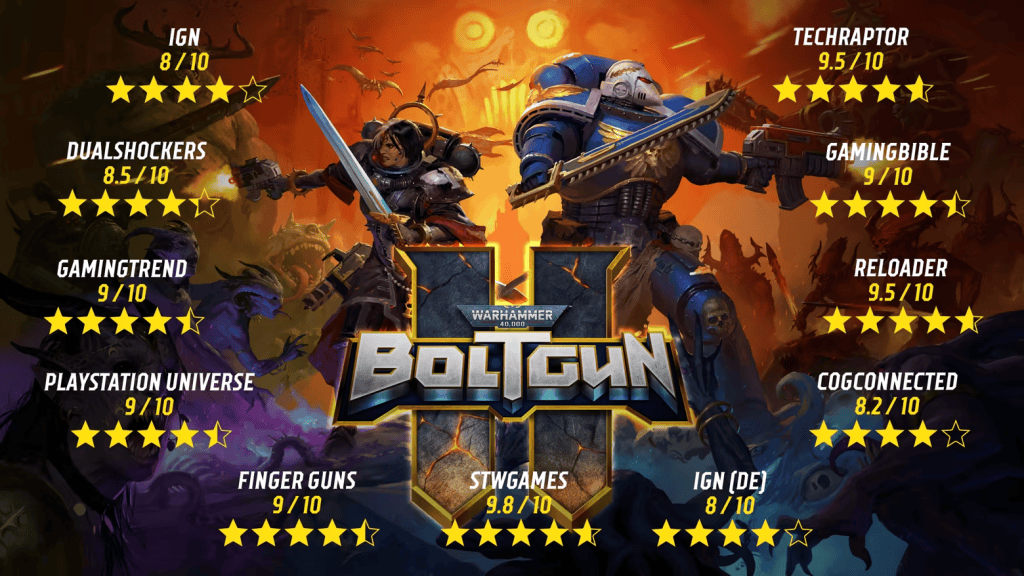
We succeeded: the game has been well received by critics and players. At time of writing (one month after release), Boltgun 2 is at 95% Overwhelmingly Positive on Steam and 82 on Metacritic.
I worked on the project through its whole development cycle, splitting my time between level design and other design areas, working on enemies, features and other critical tasks like localisation.
Level Design
On this project I did level design for nine levels. This included:
- concepting and prototyping
- creating blockouts
- populating levels and configuring actors (e.g. setting up enemy spawn parameters)
- creating level logic and level blueprints
- handover work with artists to ‘dress’ the level
- playtesting, iteration and refinement
- bug fixing and post-release updates
I created three levels from scratch, and started from an existing blockout for a further six. I was level owner for two complete chapters in the game (Nurgle Nightmare and Mountain of Skulls), with two levels included in other chapters or as standalones.
Underhive
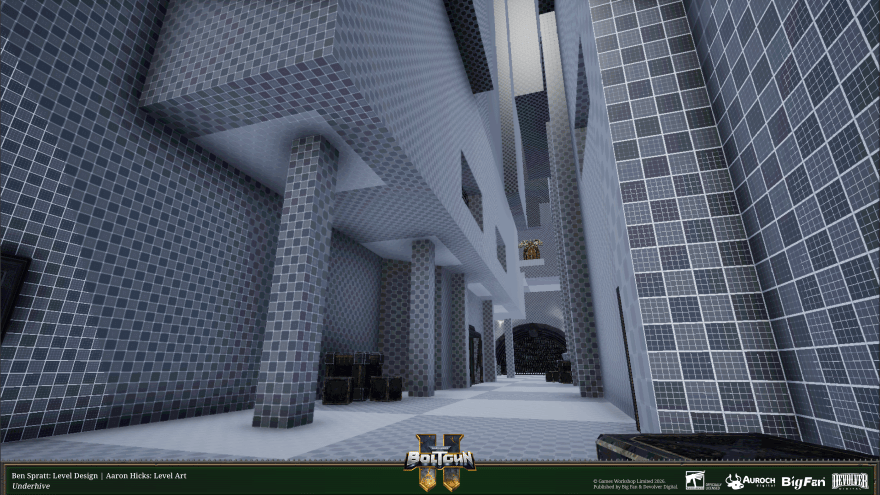
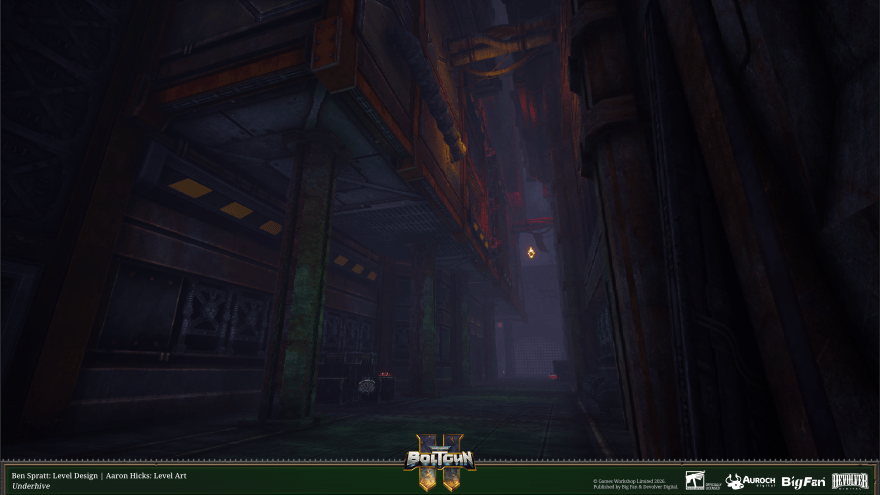
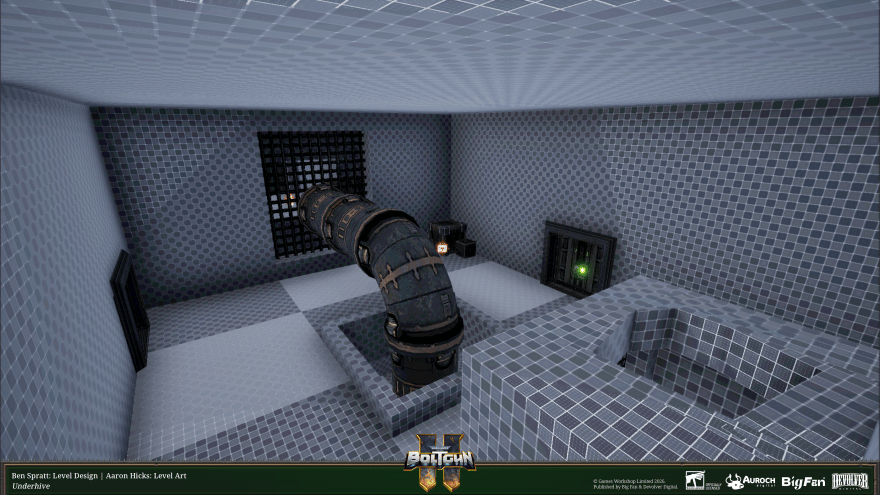
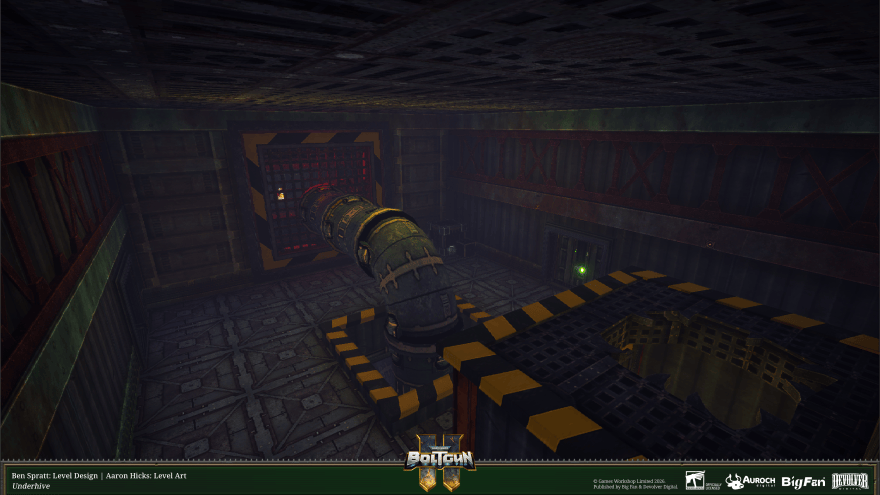
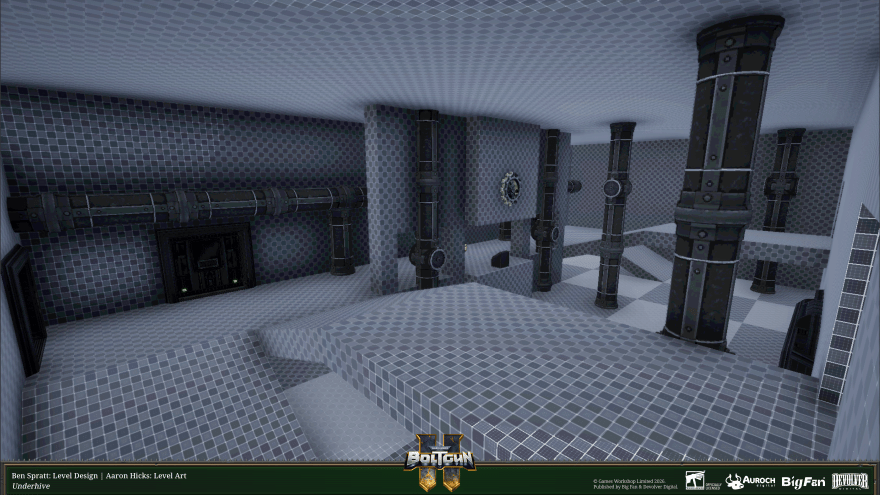
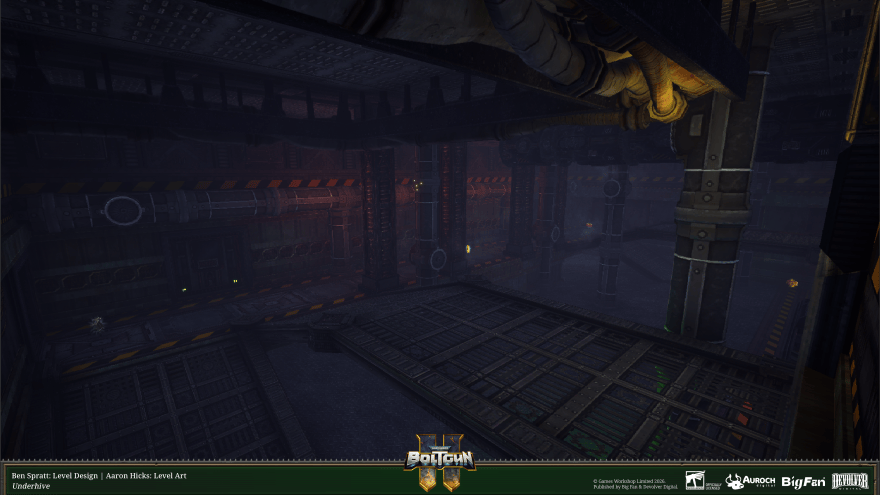
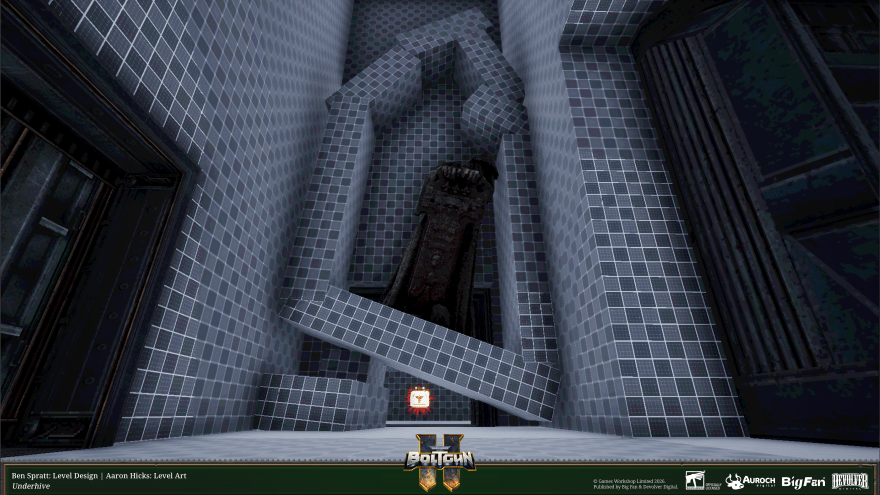
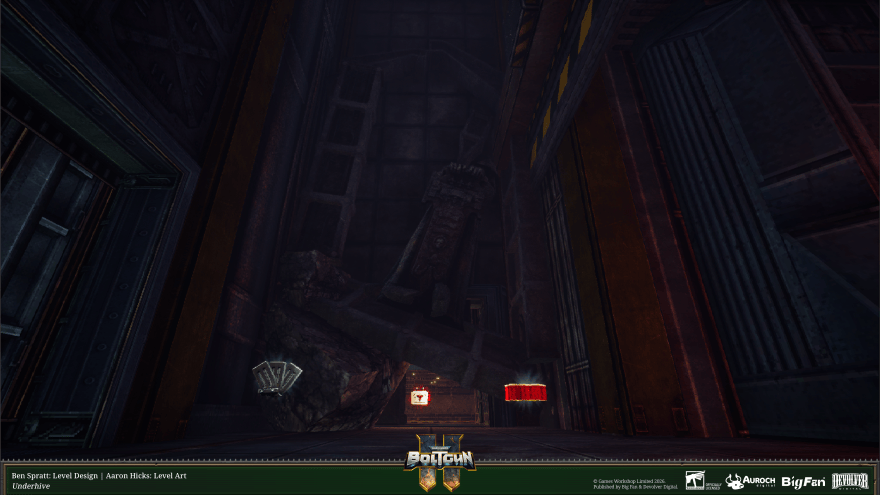
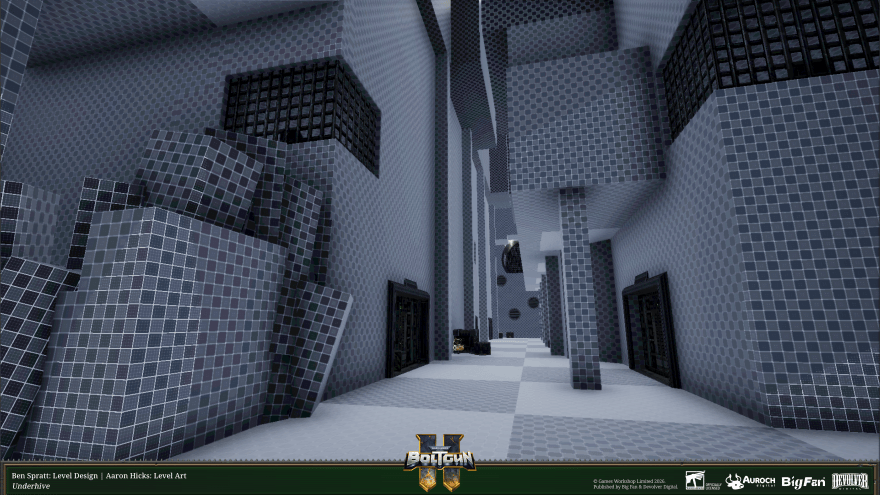
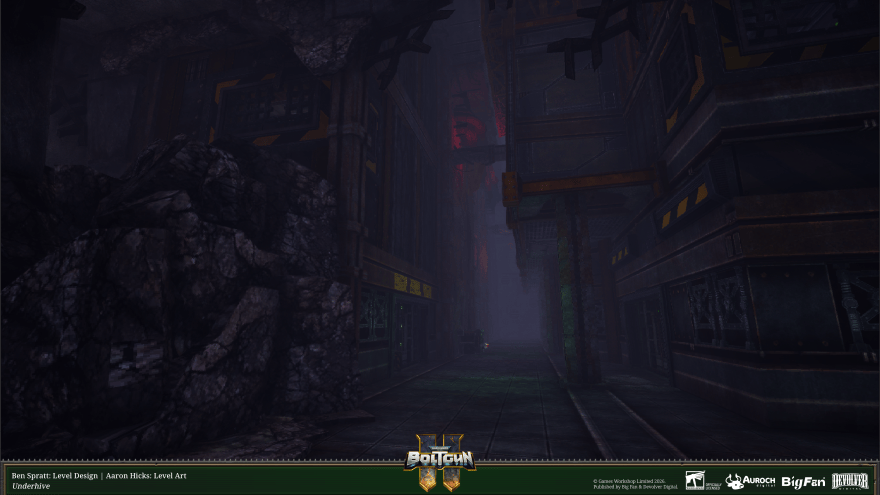
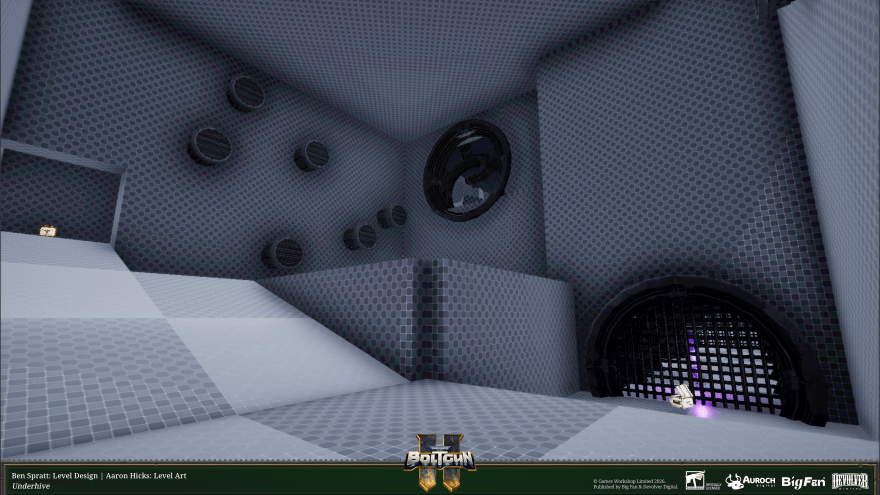
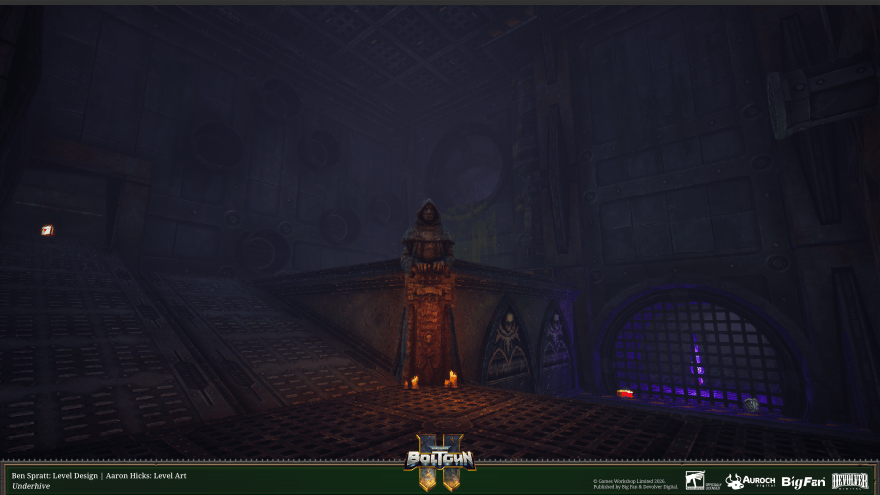
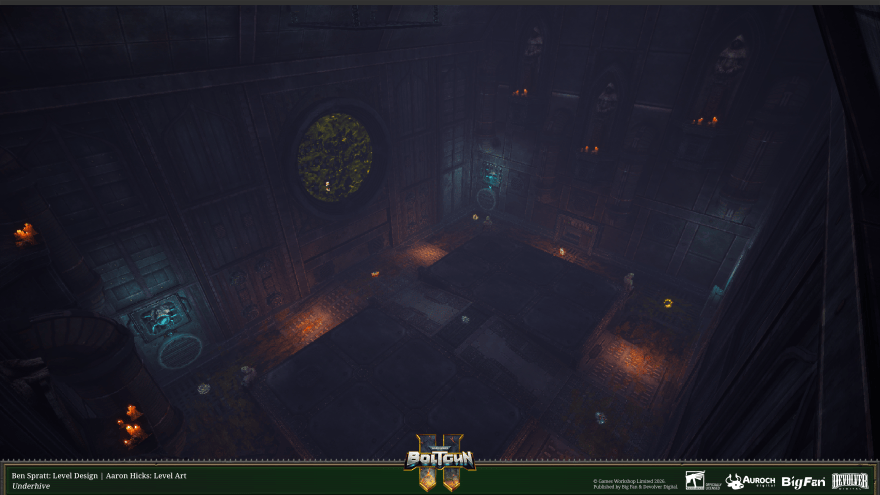
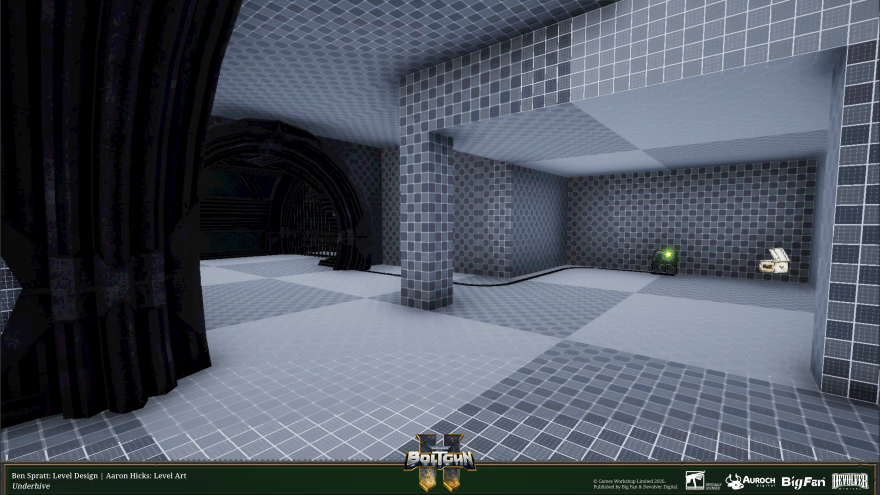
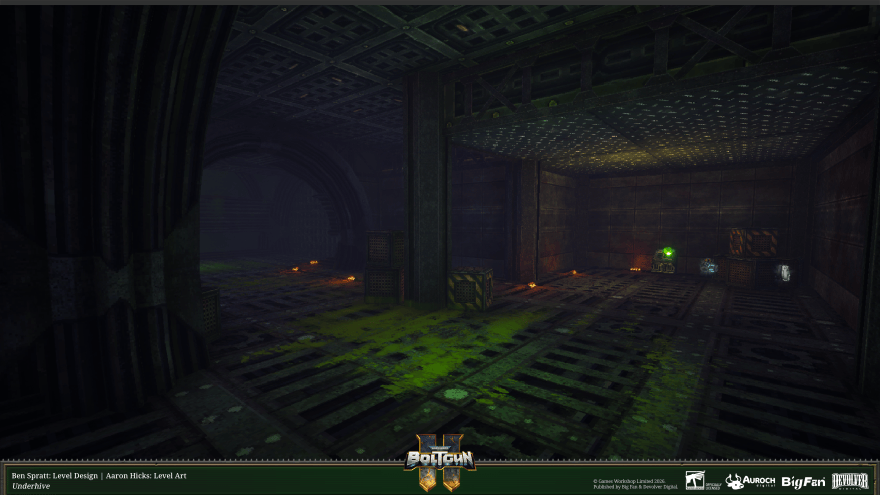
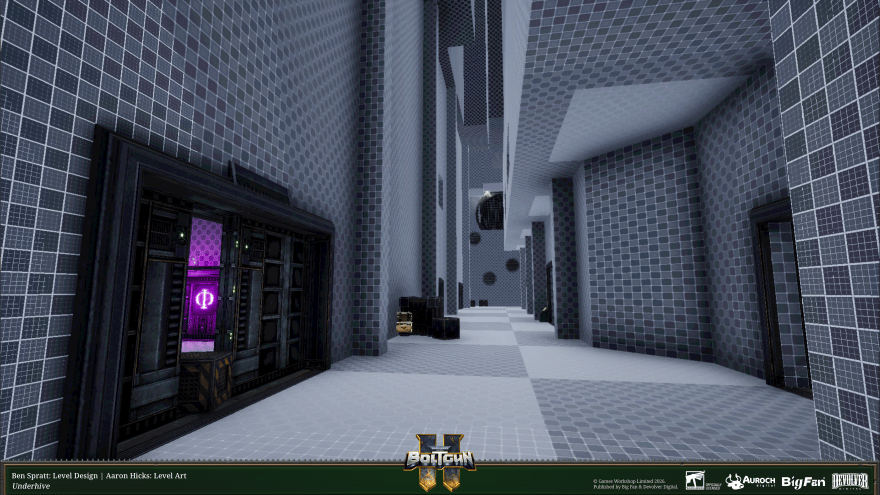
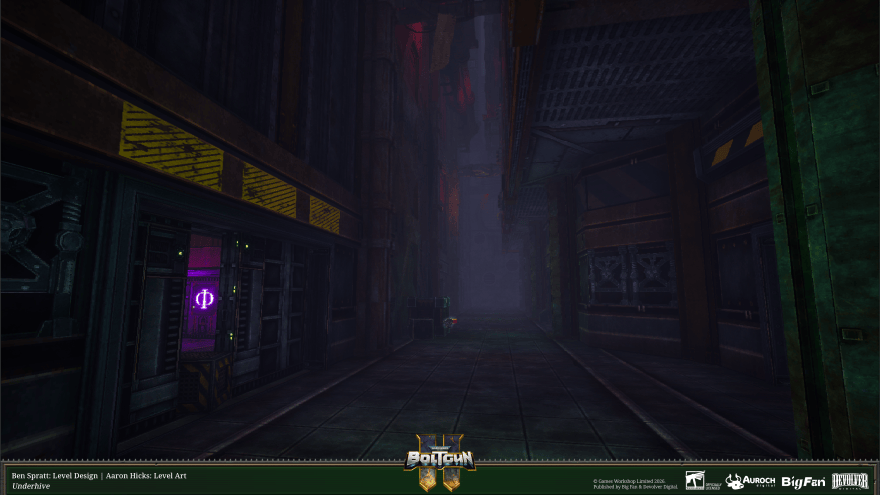
This level is set in the grim, labyrinthine lower levels of a Hive City. My aim was to create a cramped, oppressive feel to the spaces. The level has two main routes, both of which lead to a key, and which can be completed in either order. Each section leads back to the central street; this helps players orient themselves and understand how far through the level they are, while also providing a satisfying payoff as they begin to understand how the map winds back on itself.
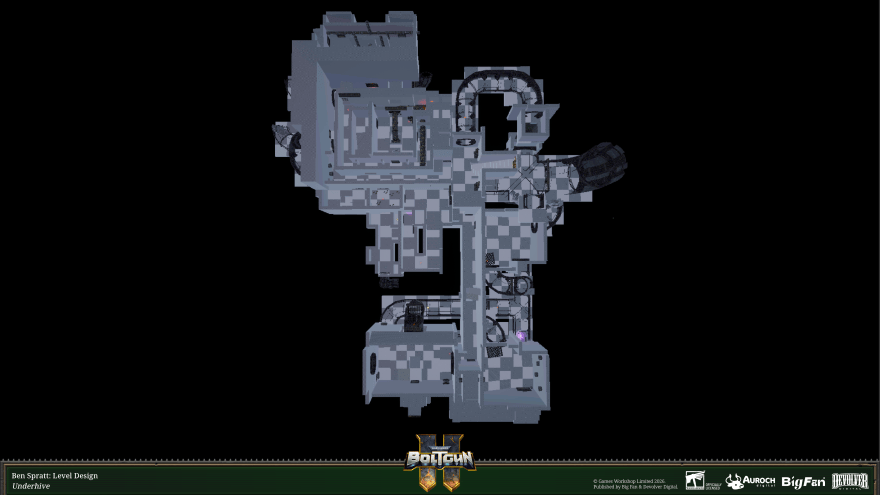
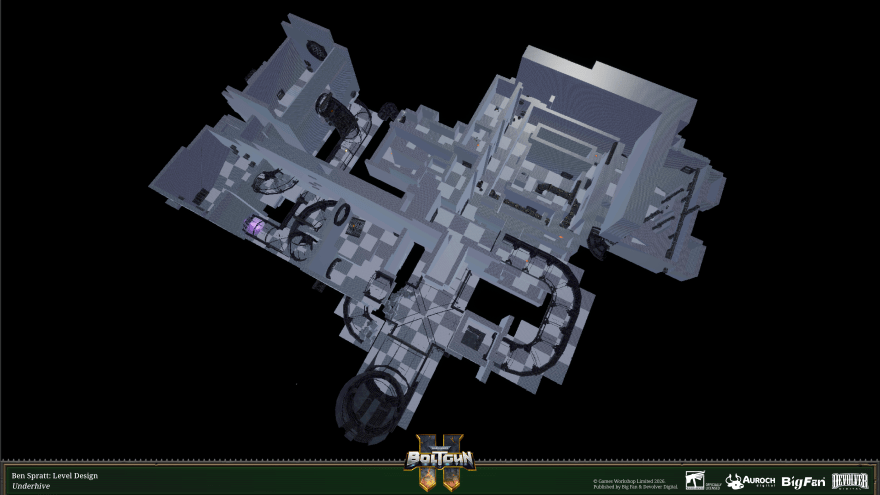
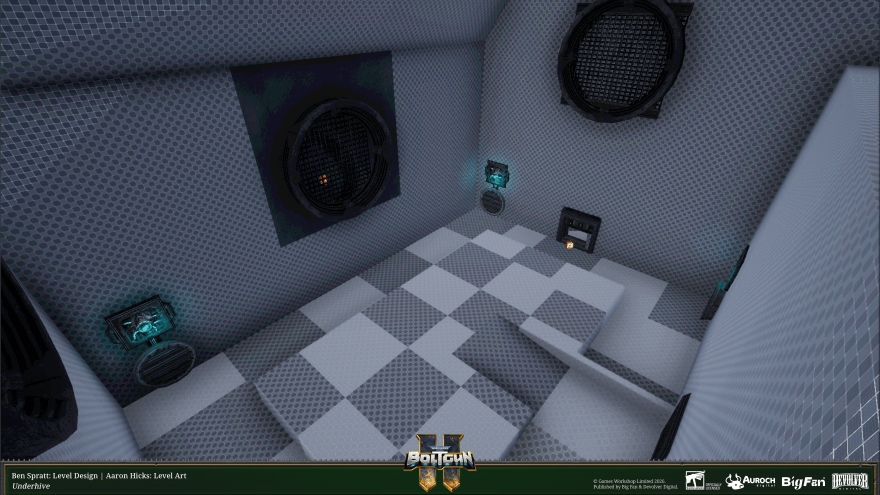
The level introduces a simple new mechanic: toxic gas vents. I included several different variations on this idea, with some vents controlled by push switches, some timed, and others activated or deactivated with shootable buttons. The two major encounters leading up to the each key use the ‘poison gas’ concept in different ways: the red key encounter uses thickening fog and PFX to restrict the player’s visibility during the fight, and the purple key encounter features activatable vents which can be used to poison some of the enemies (but which are also hazardous to the player).
You can see gameplay footage of this level here.
Gallery: Underhive initial blockouts and final level art
Welcome to the Wilds
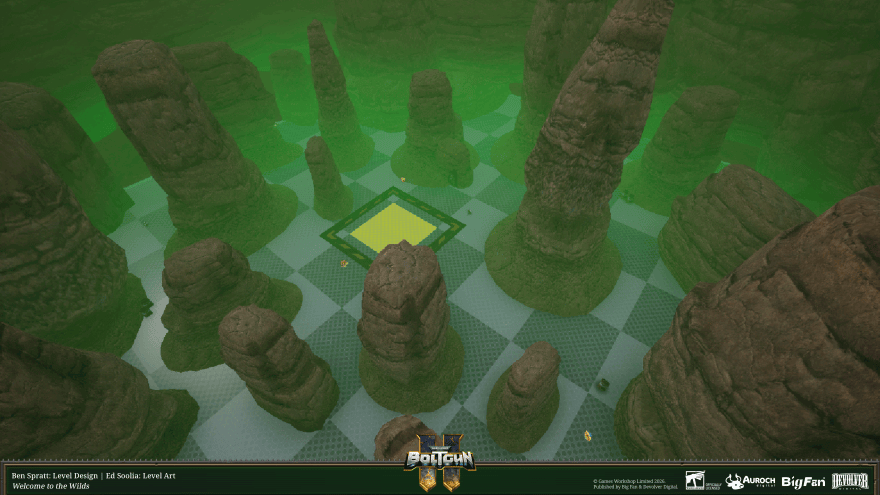
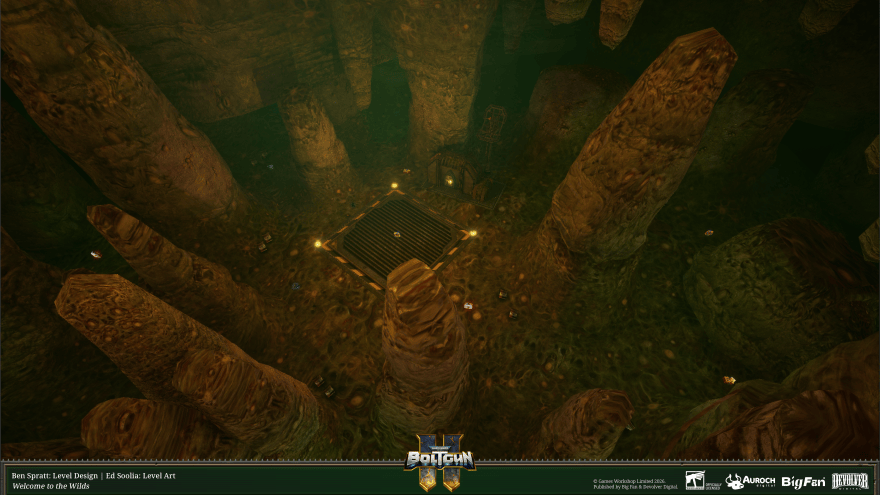
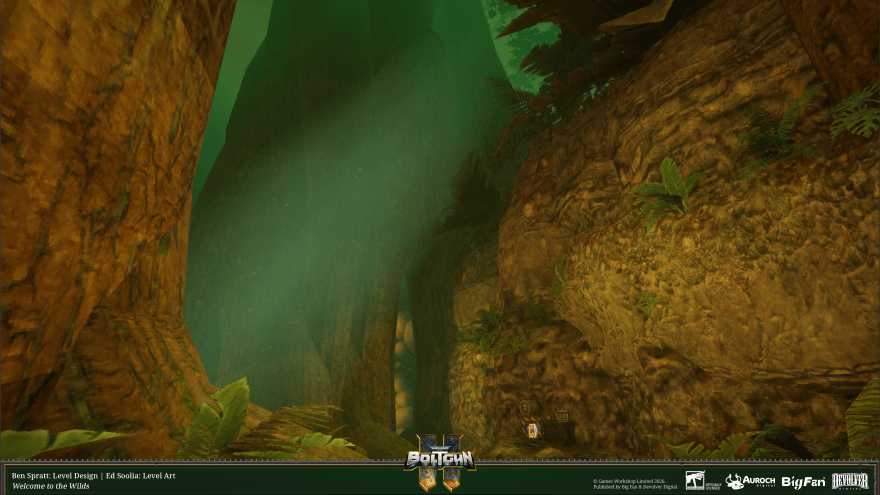
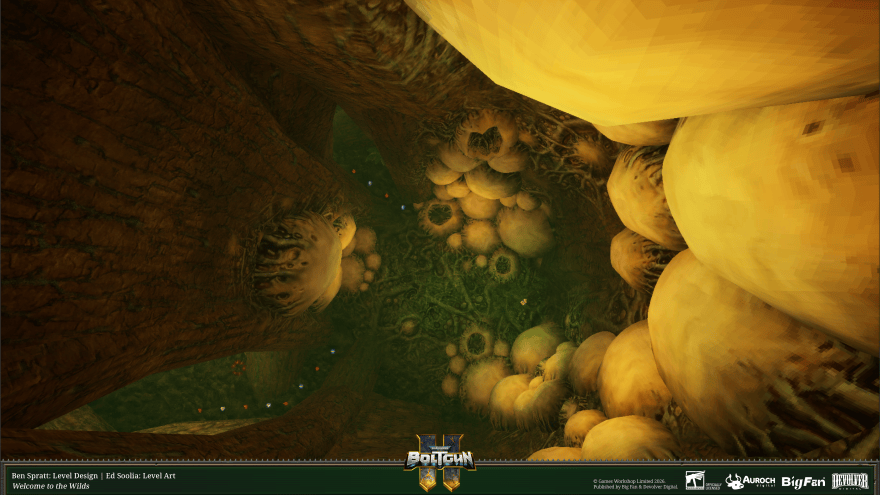
In contrast, Welcome to the Wilds is a simpler early game level that introduces the jungle-like ‘Deathworld’ biome. I wanted players to feel like the level is quite open and free, while in fact it is quite linear so that they are funnelled through the level’s main beats without getting lost. With the focus on the striking setting, I wanted players to enjoy the full variety of this biome so added caves, waterfalls, dense forest and a knotted root system. A version of this level was presented as the first of two in the Boltgun 2 demo.
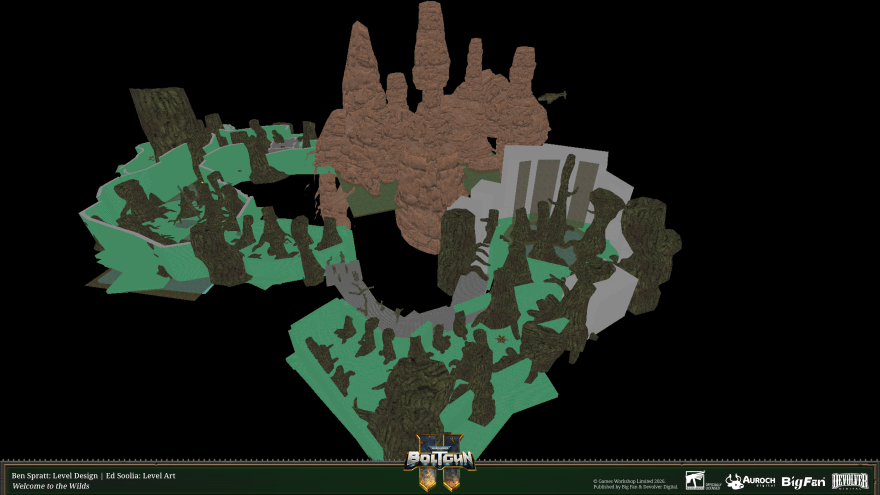
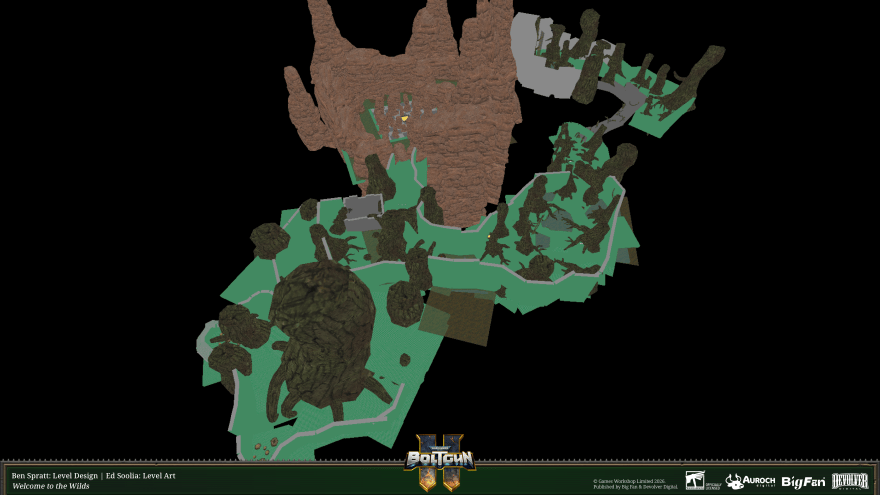
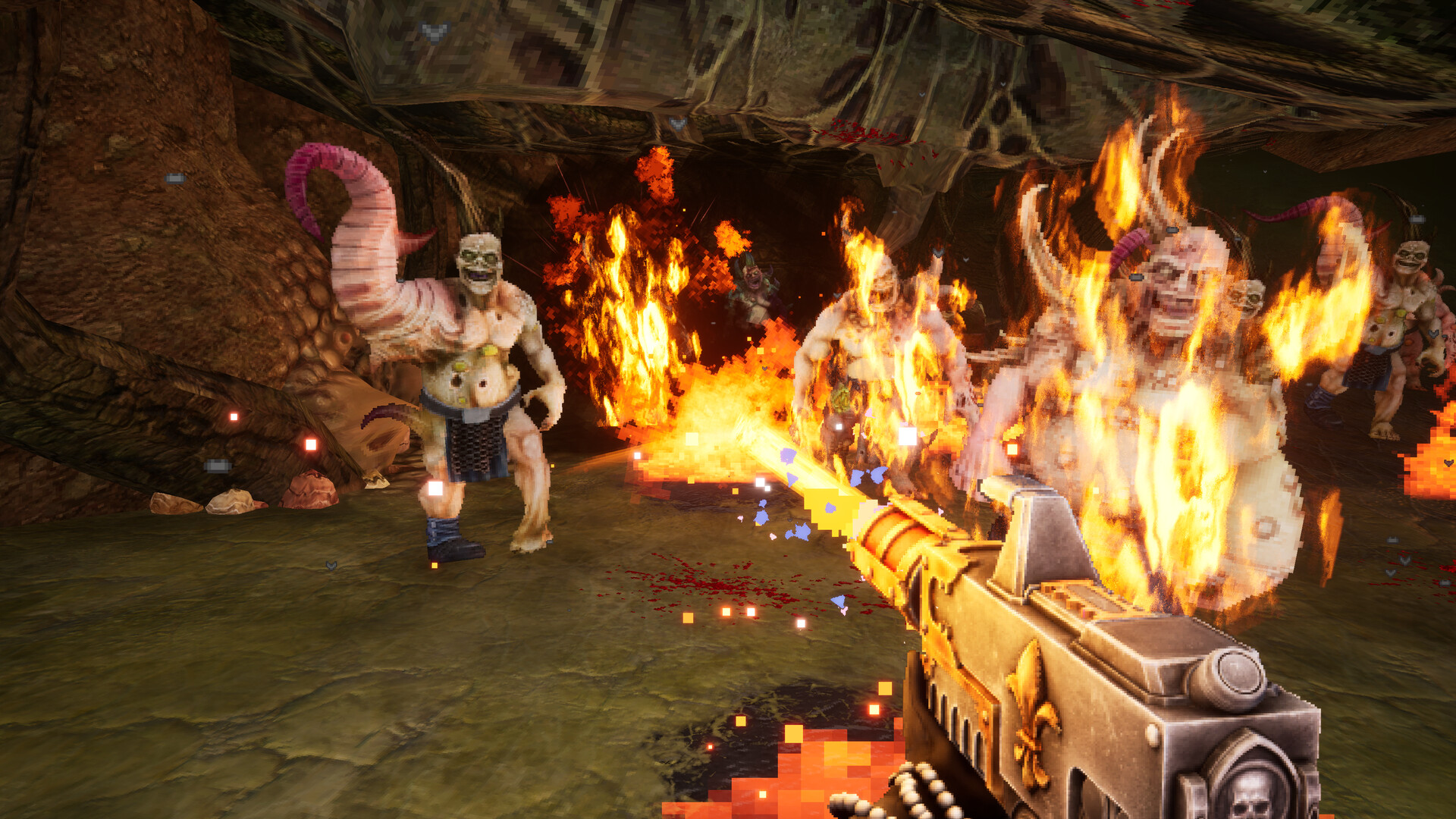
The level culminates with a climactic encounter that introduces the shambling Poxwalker enemies. The player awaits rescue for a set time, fending off scores of enemies closing in from the surrounding swamp. The space needed to accommodate a very large number of Poxwalkers, while also not being so big that the horde was spread too thinly, ruining the sense of tension. It also needed careful balance to ensure the encounter felt overwhelming, while – as an early level – not actually being too tough.
You can see gameplay footage of this level here.
Gallery: Welcome to the Wilds initial blockouts and final level art
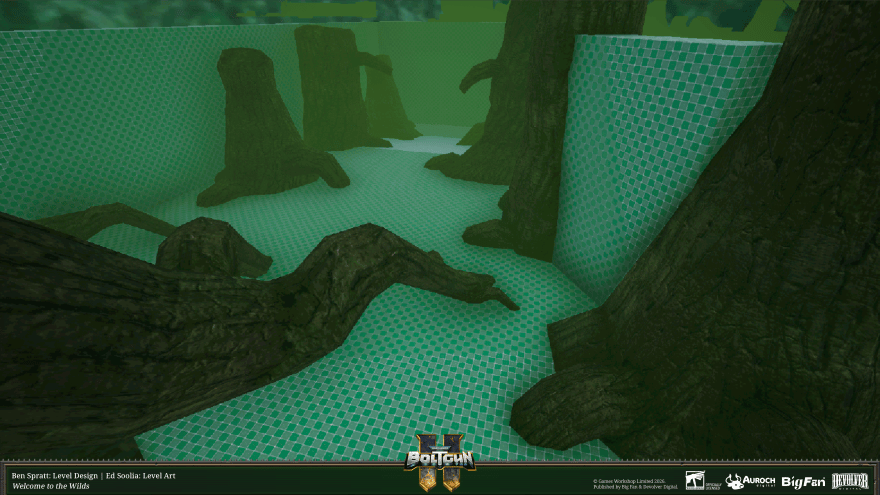
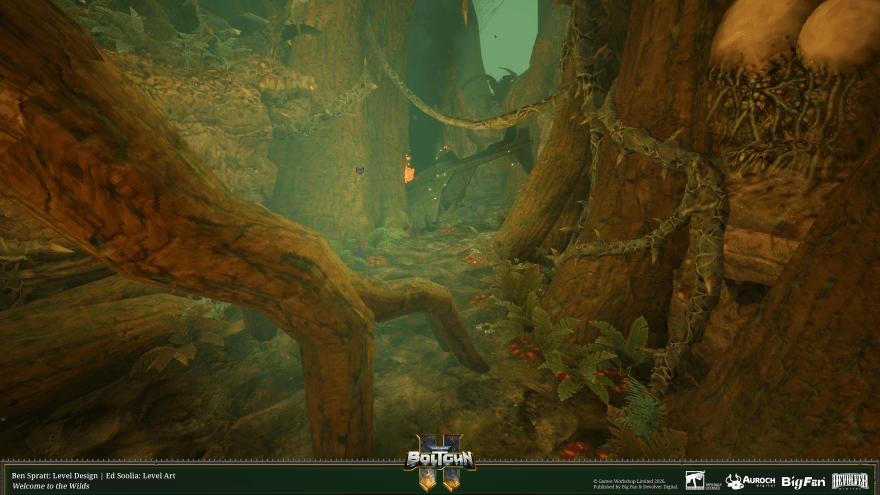
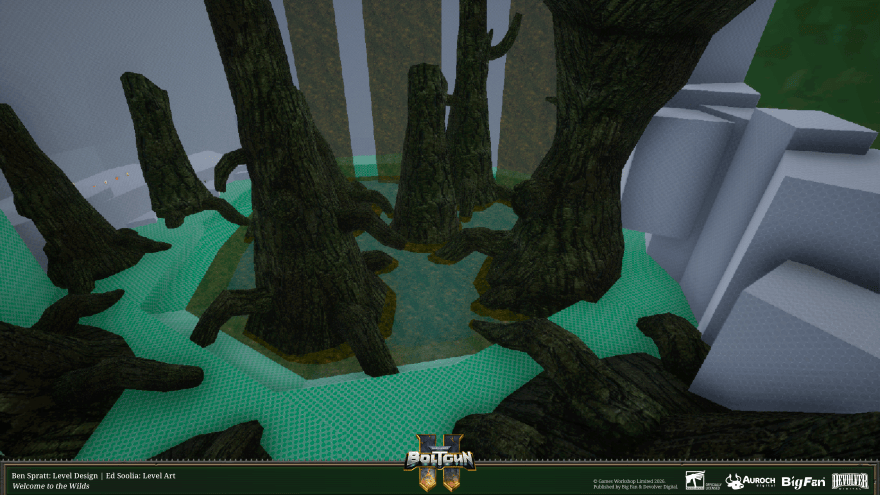
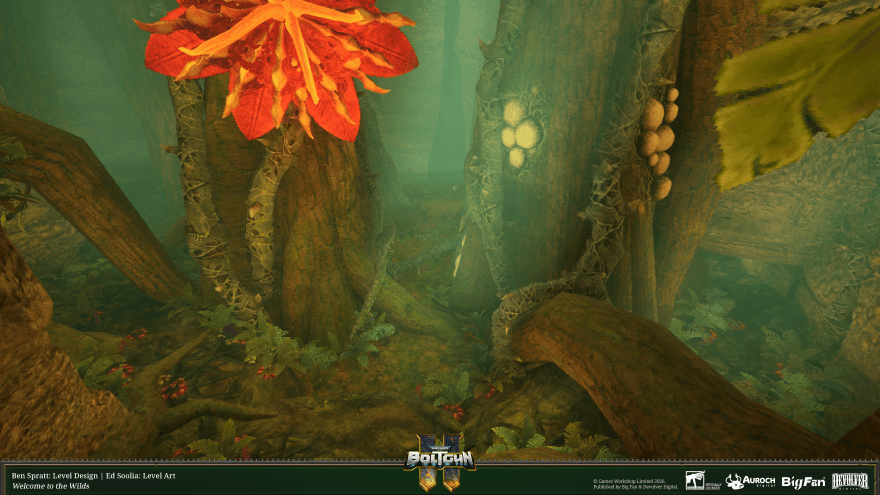
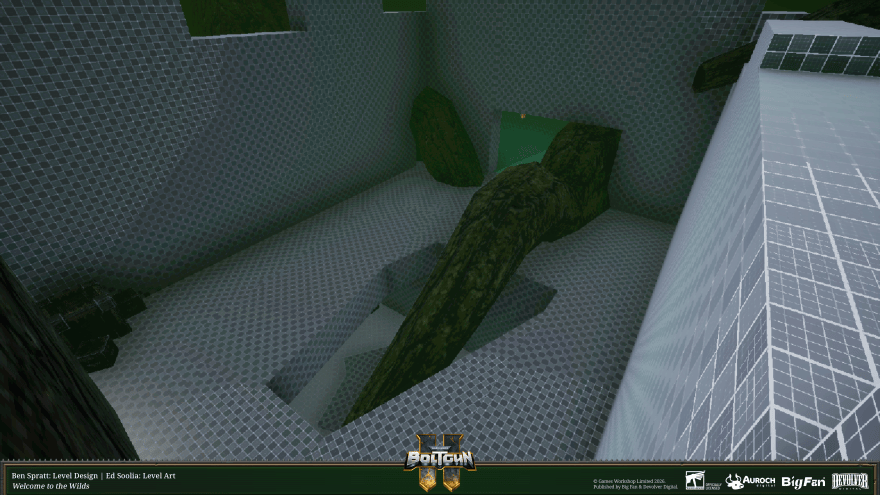
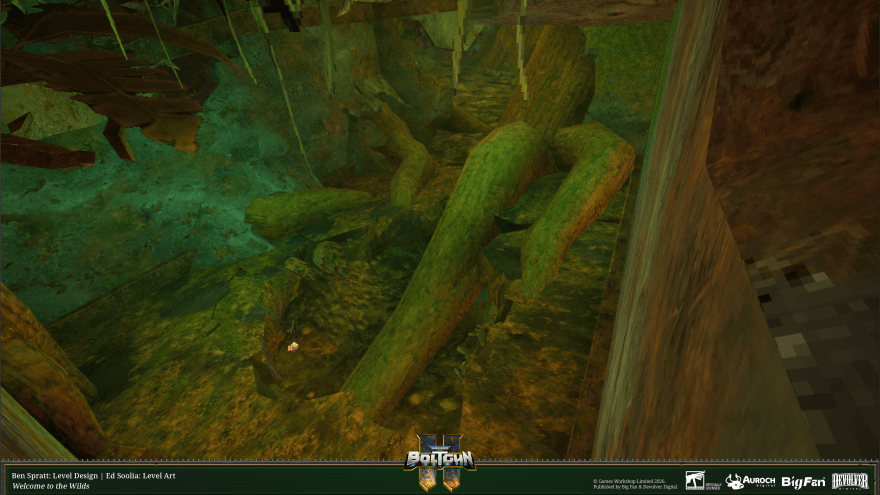
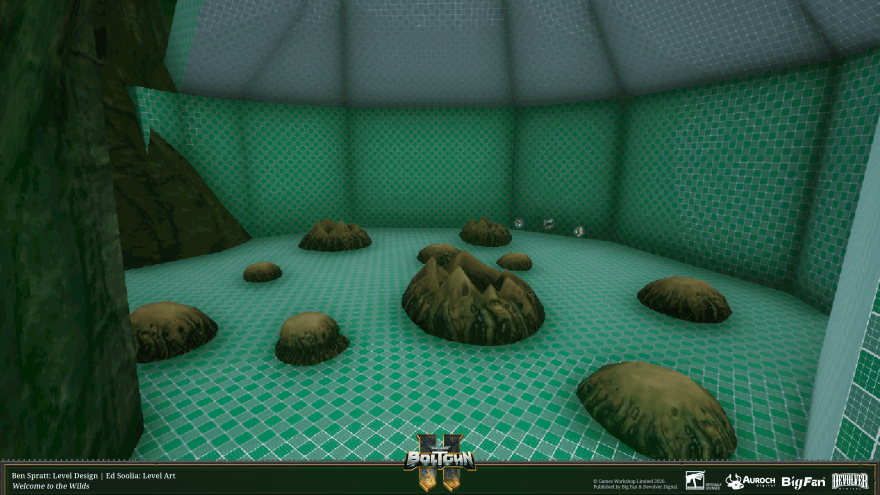
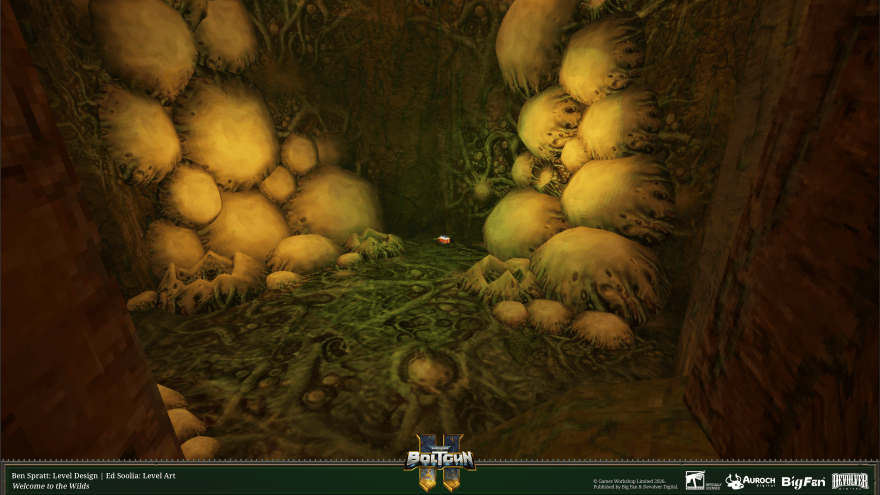
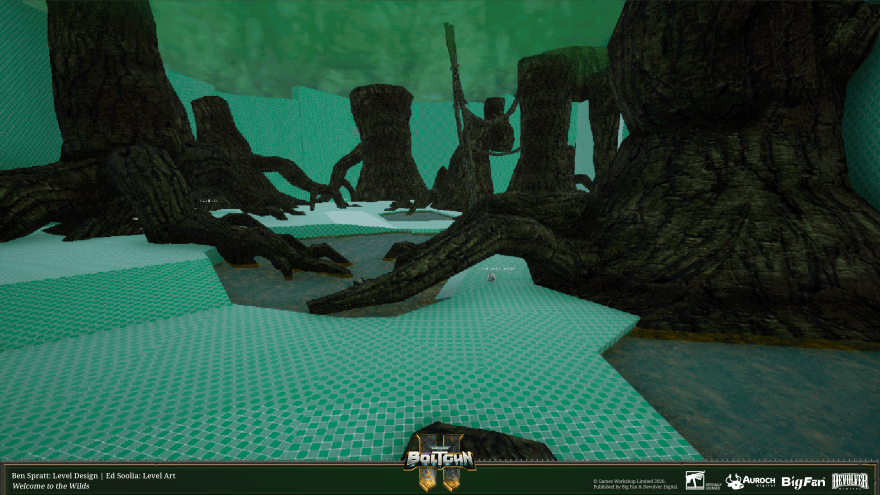
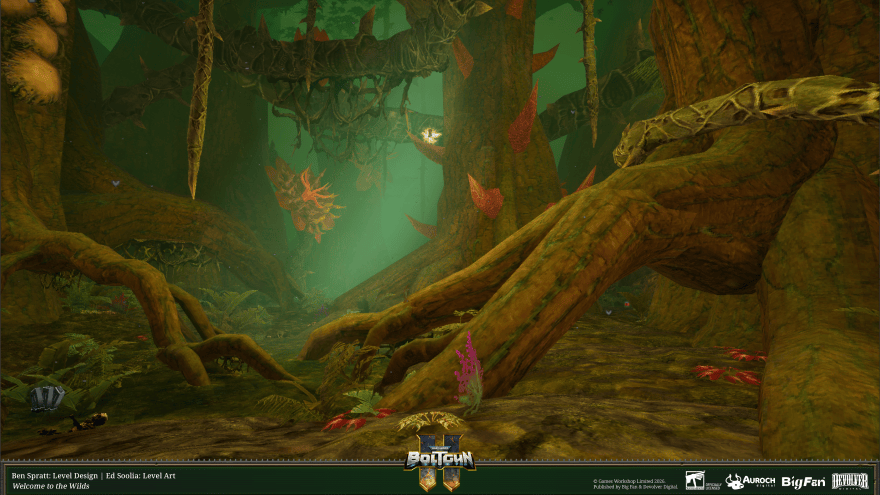
Gallery: Welcome to the Wilds other level images
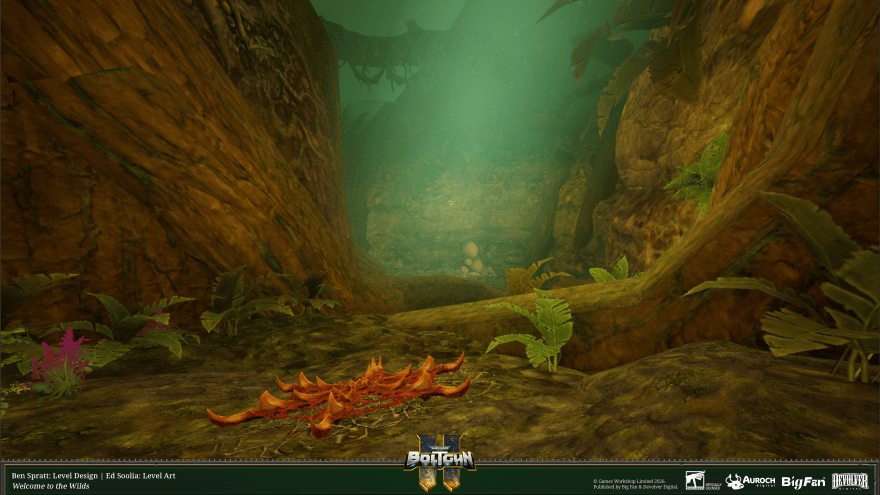
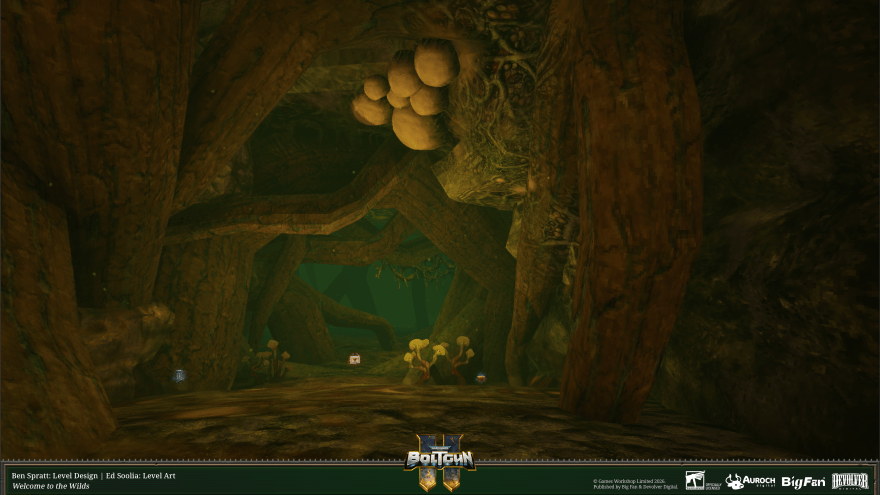
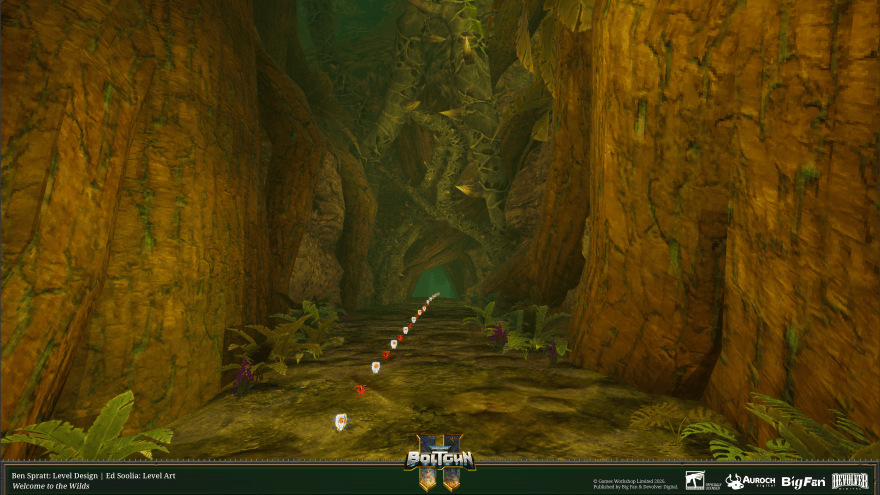
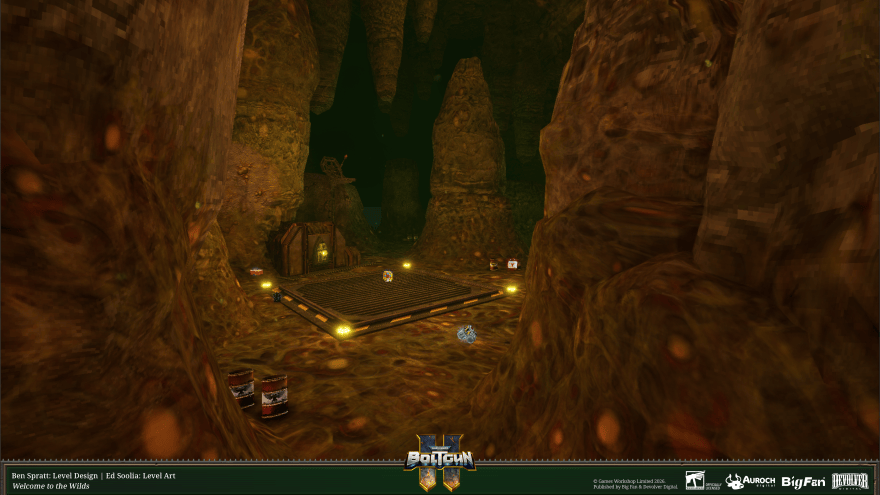
Dilapidated Prison
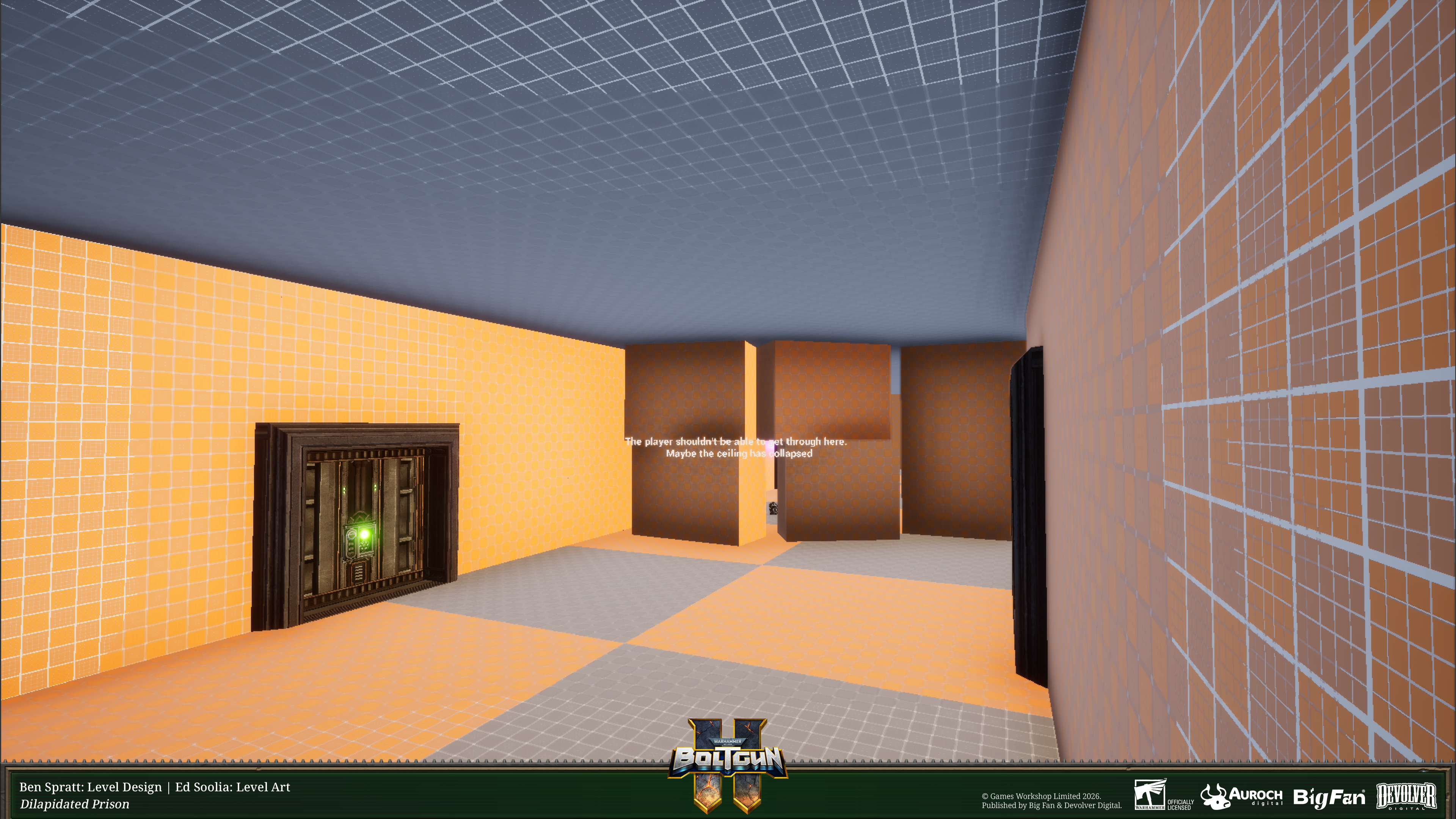
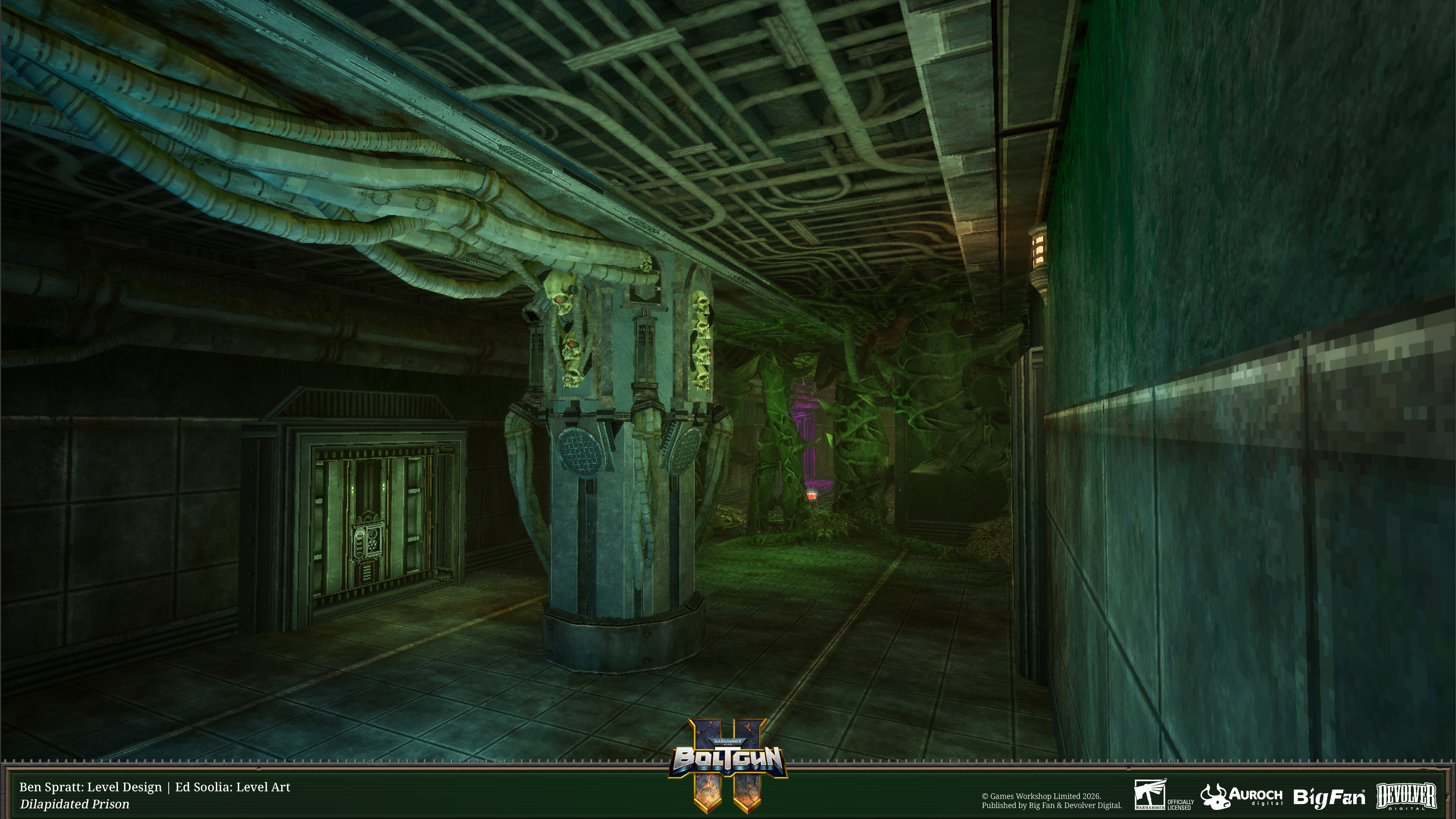
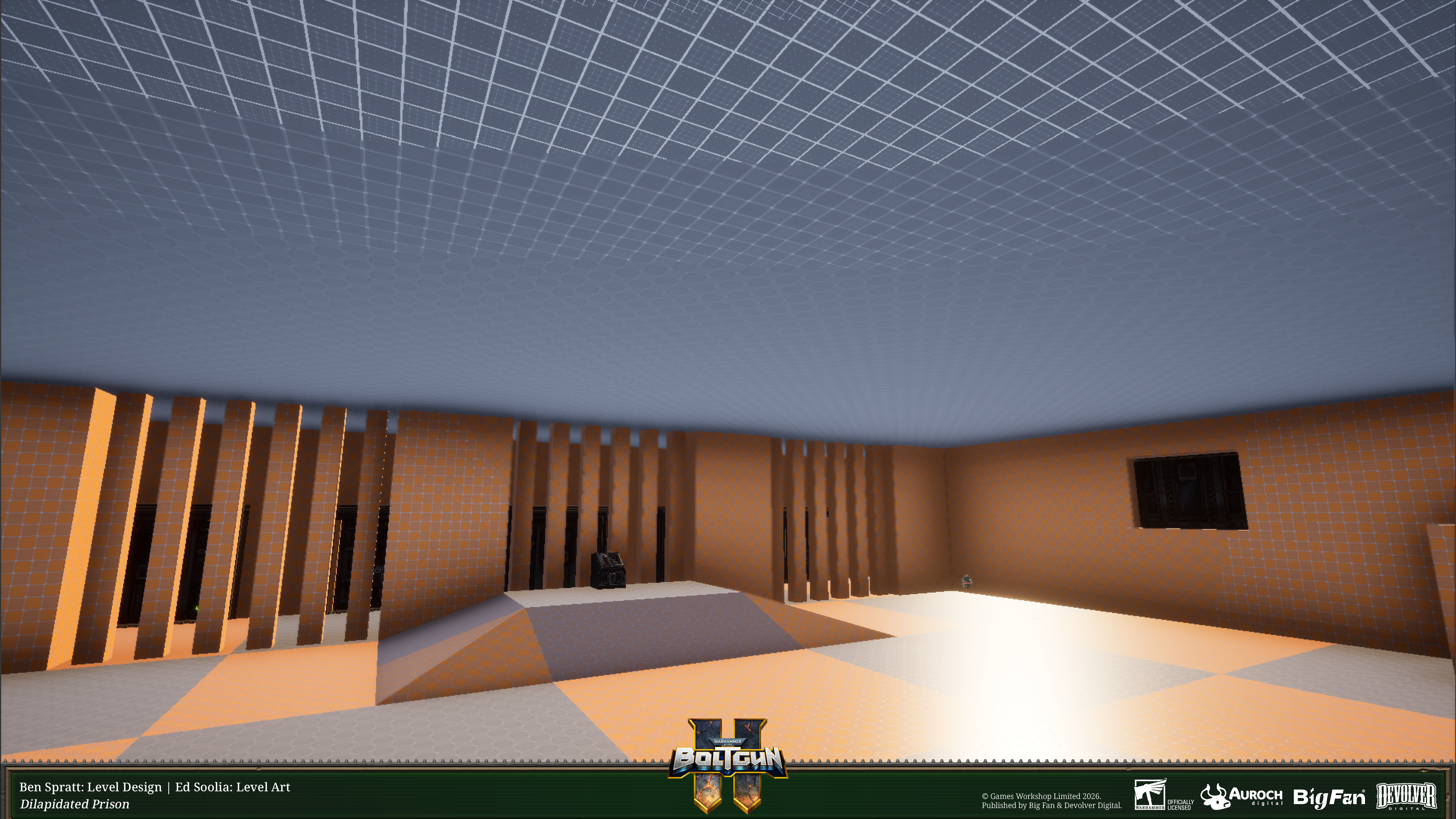
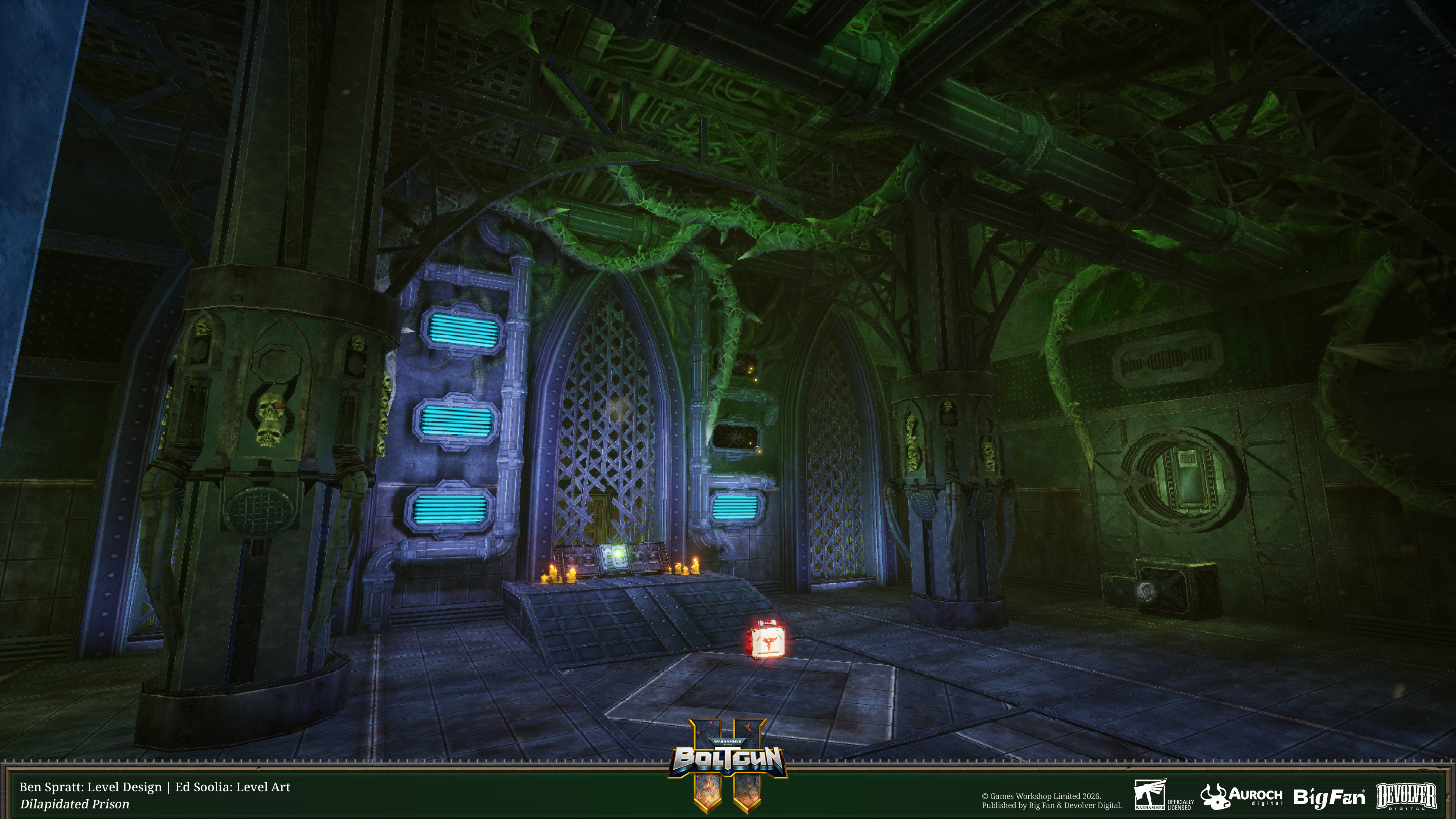
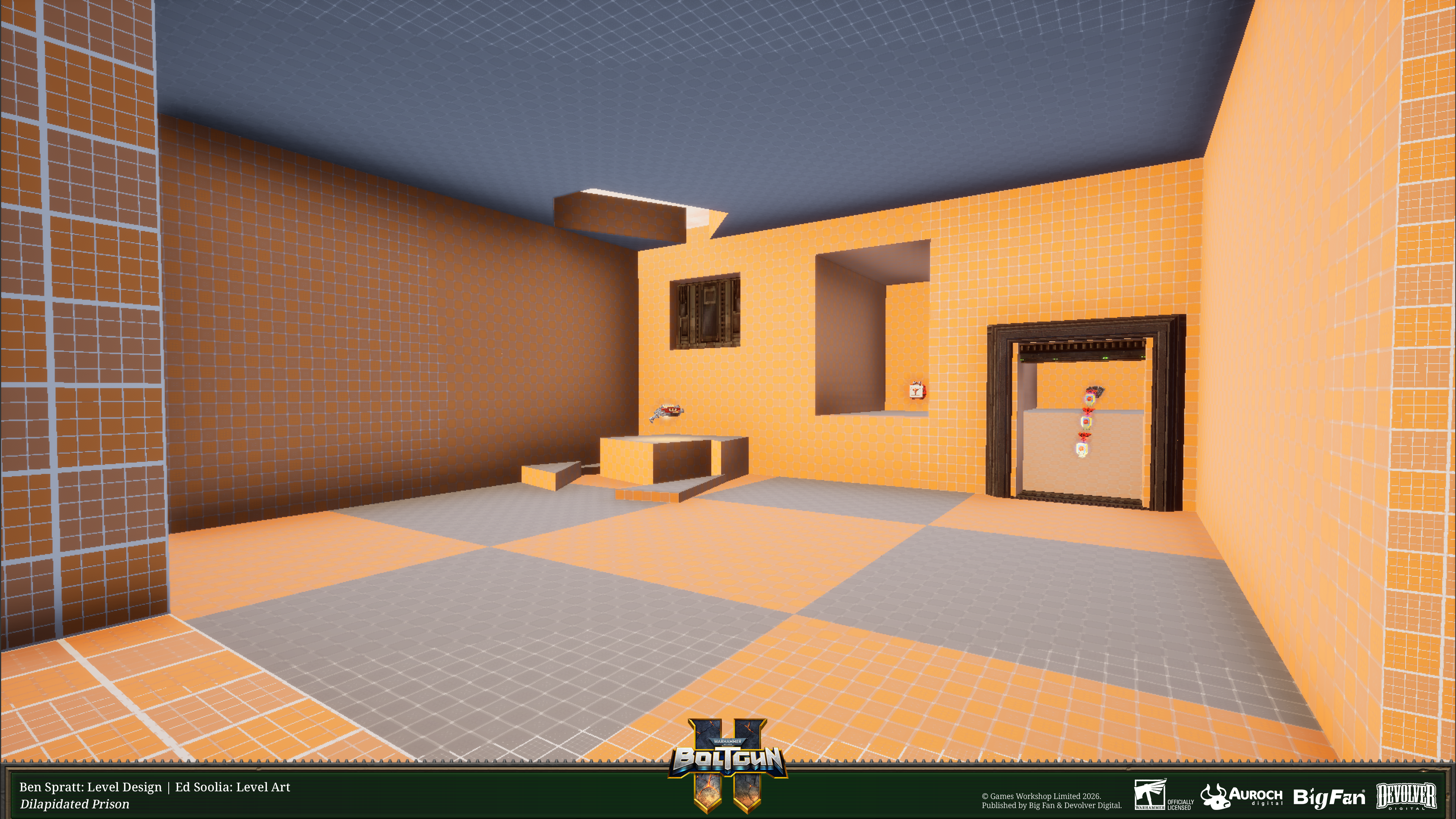
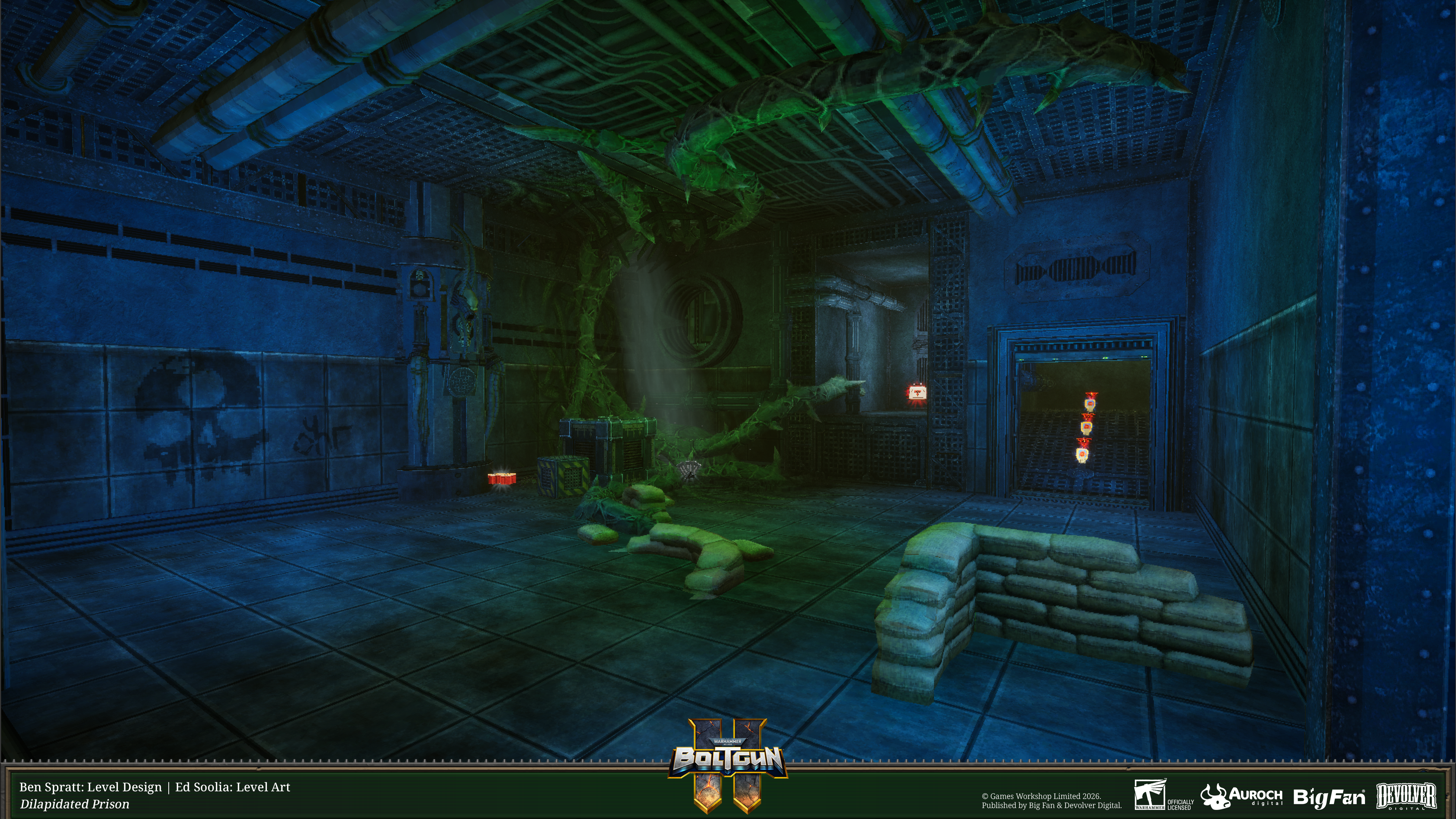
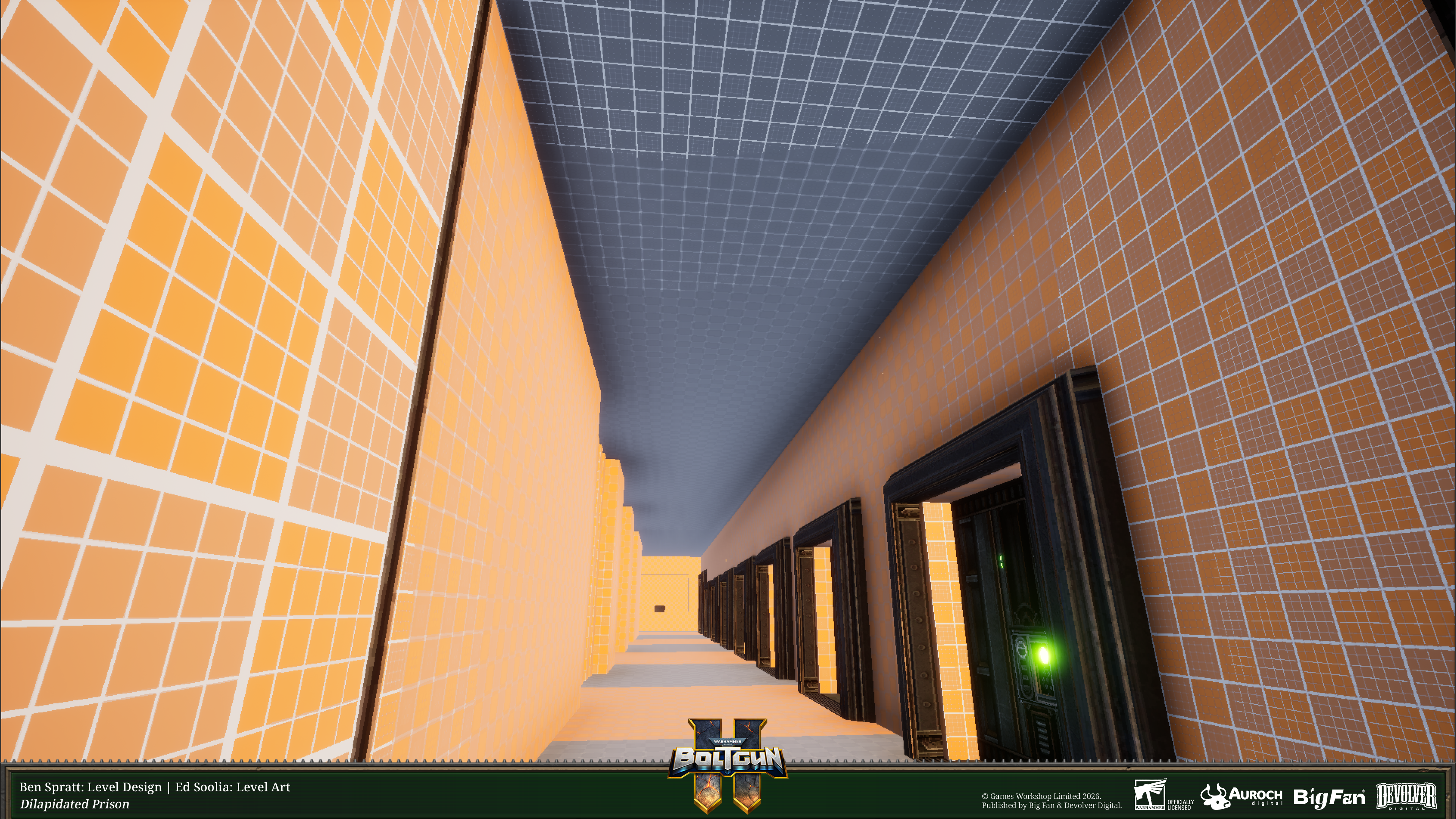
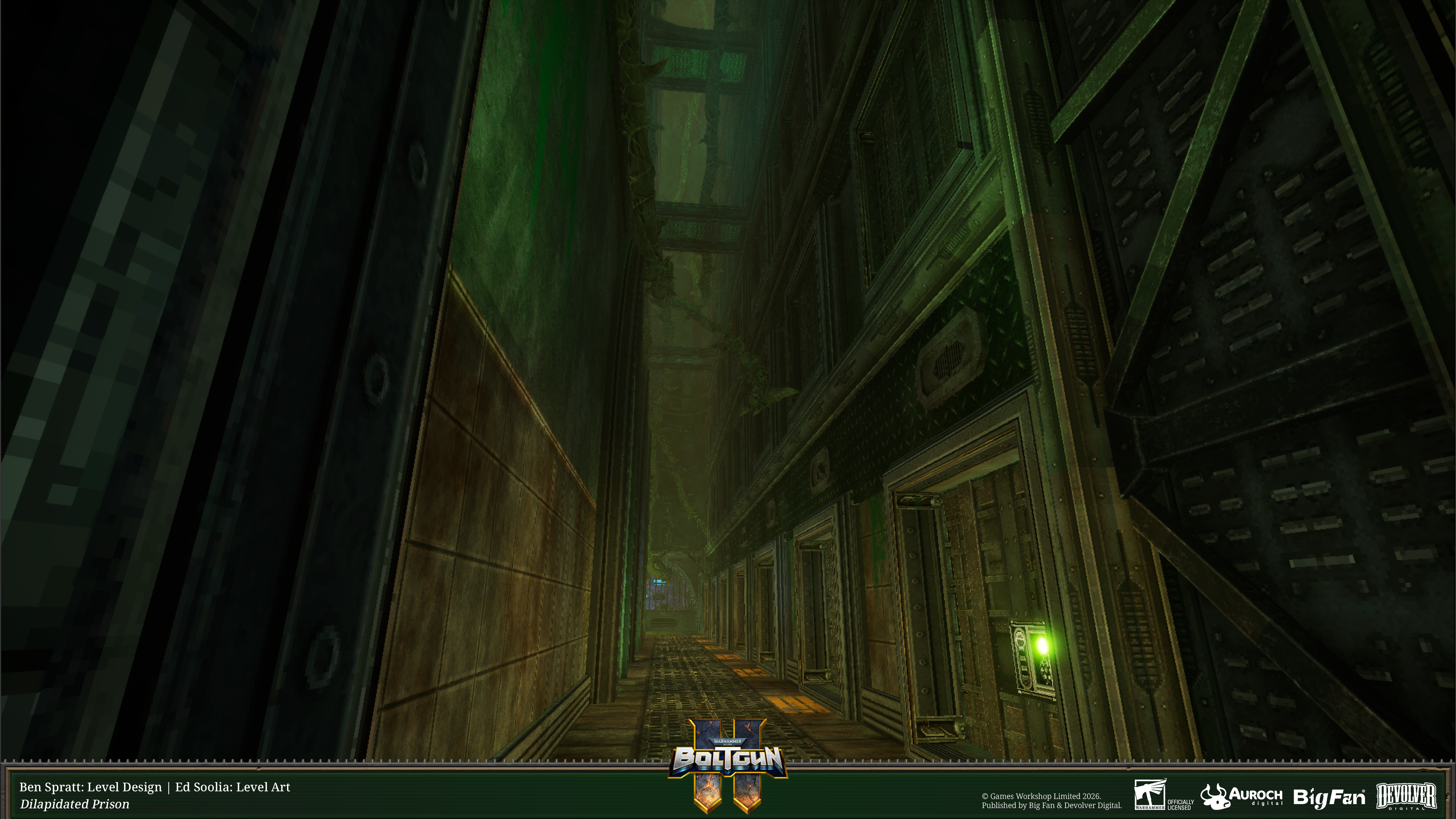
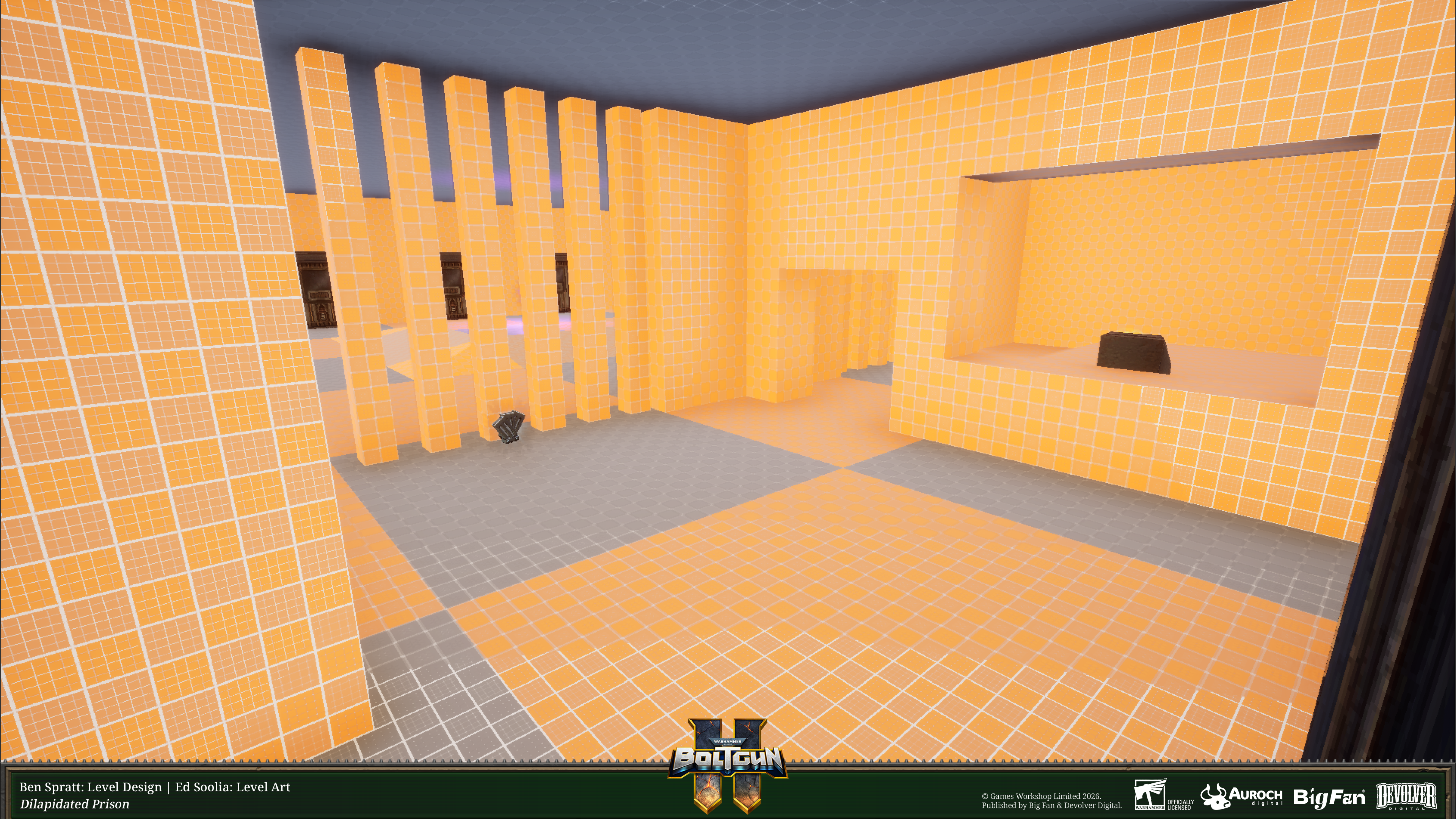
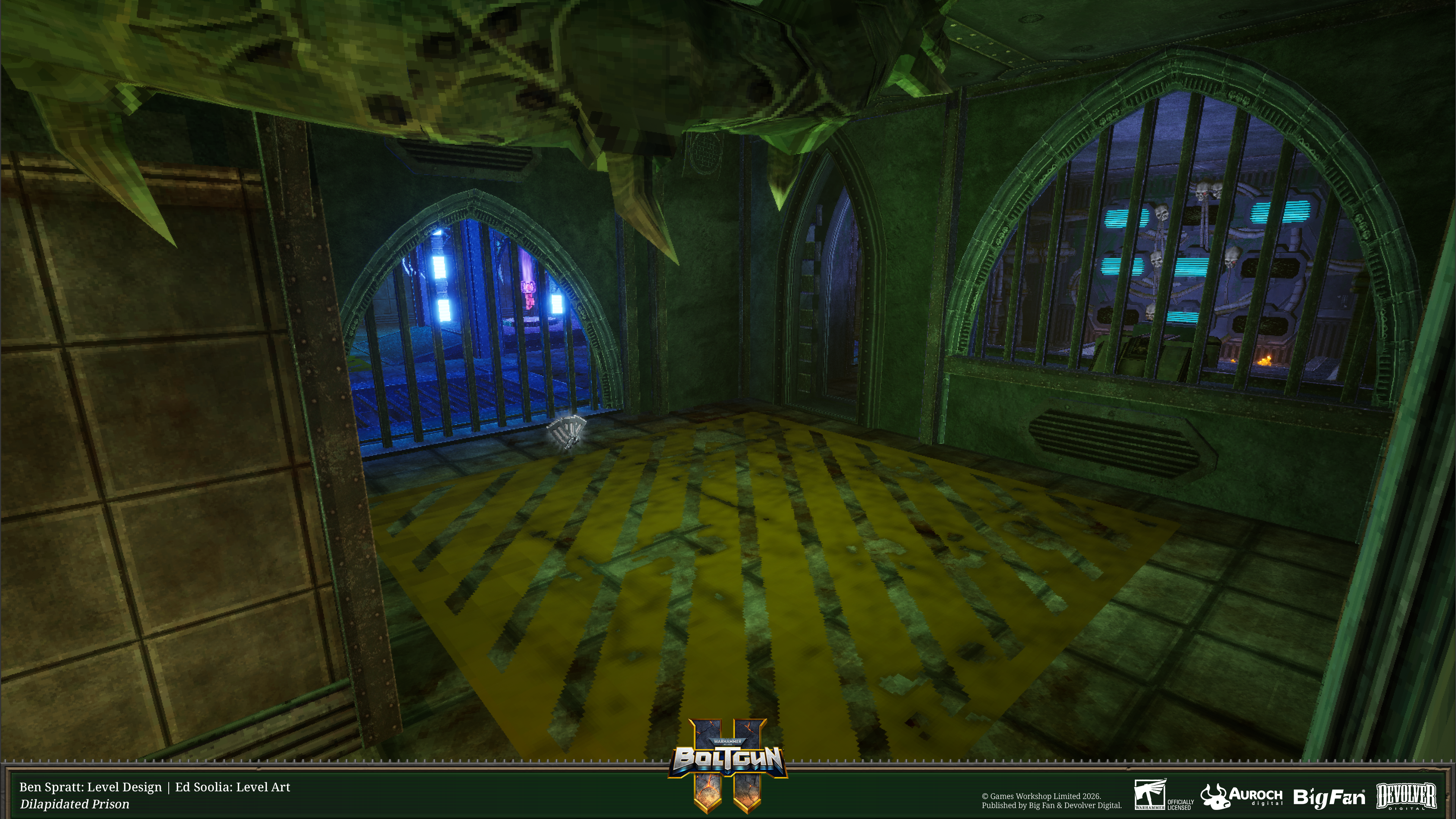
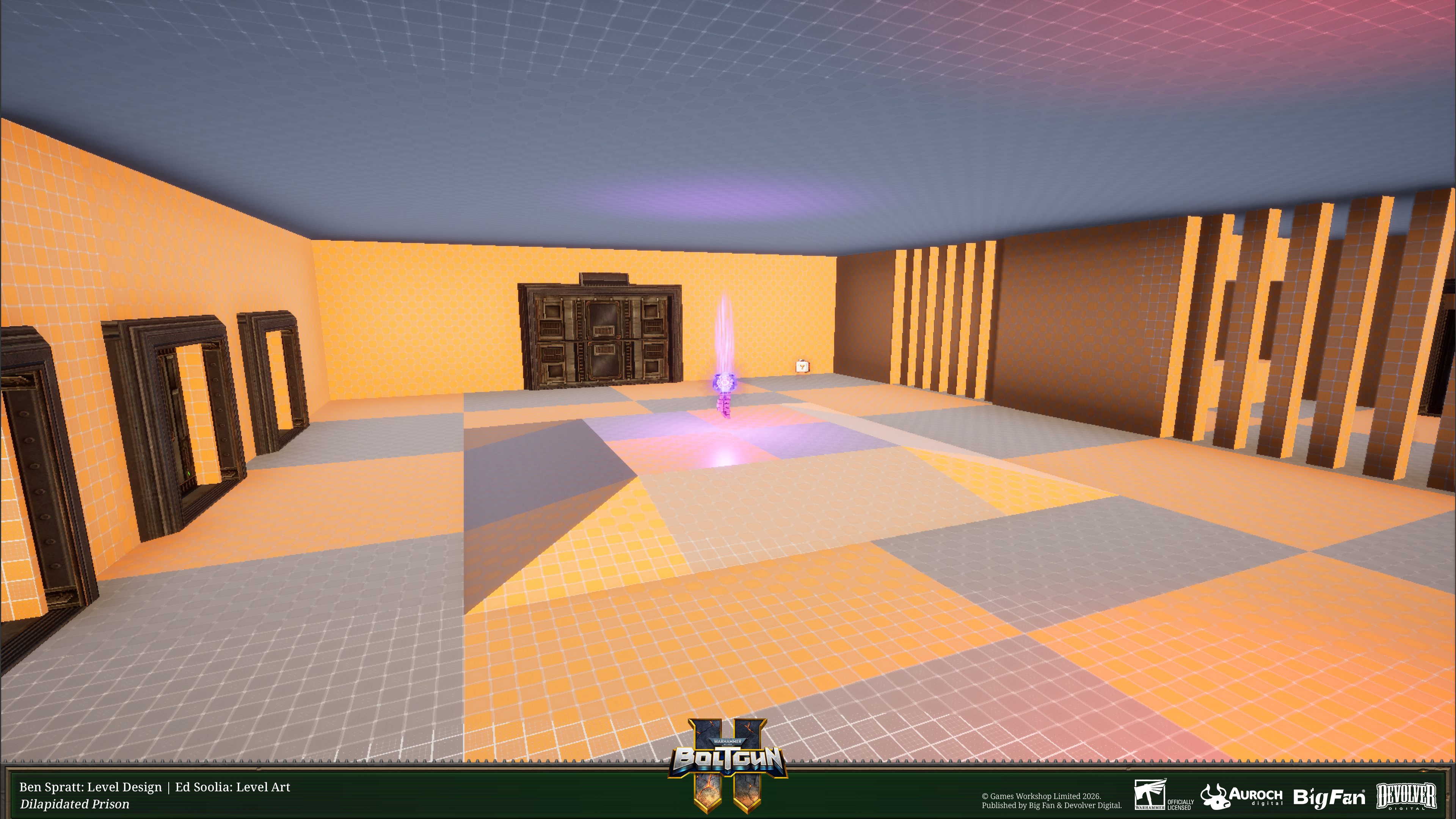
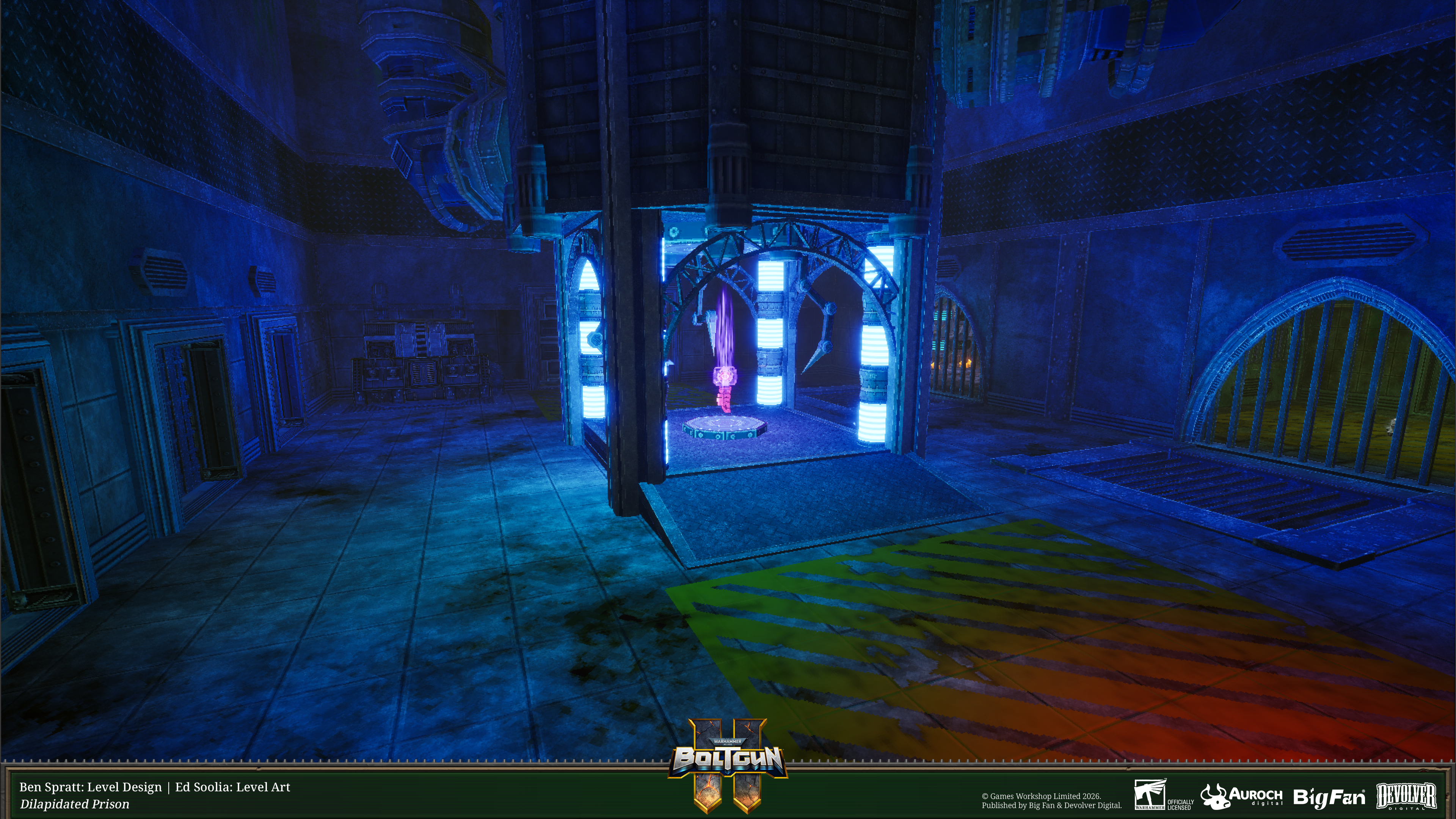
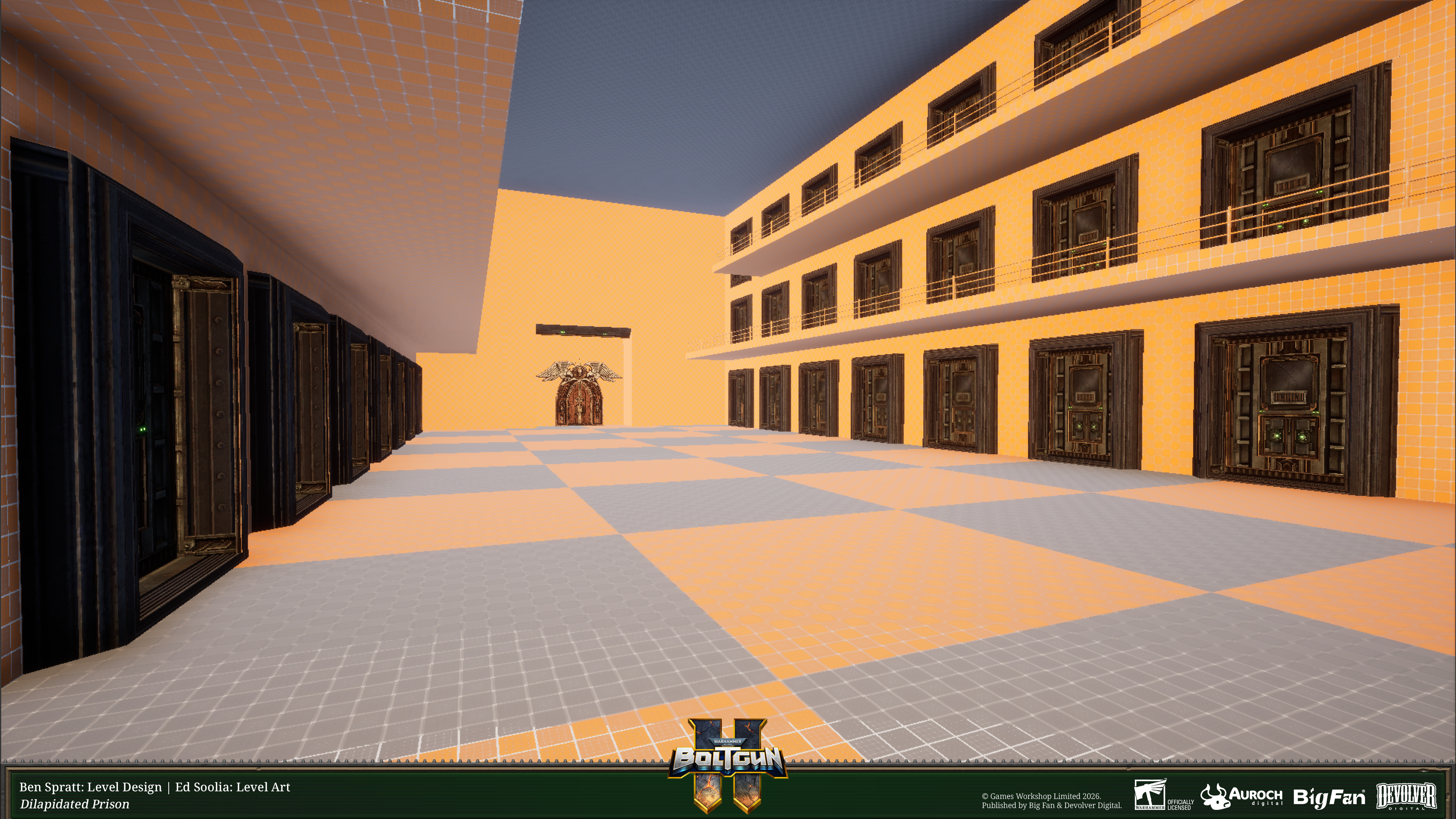
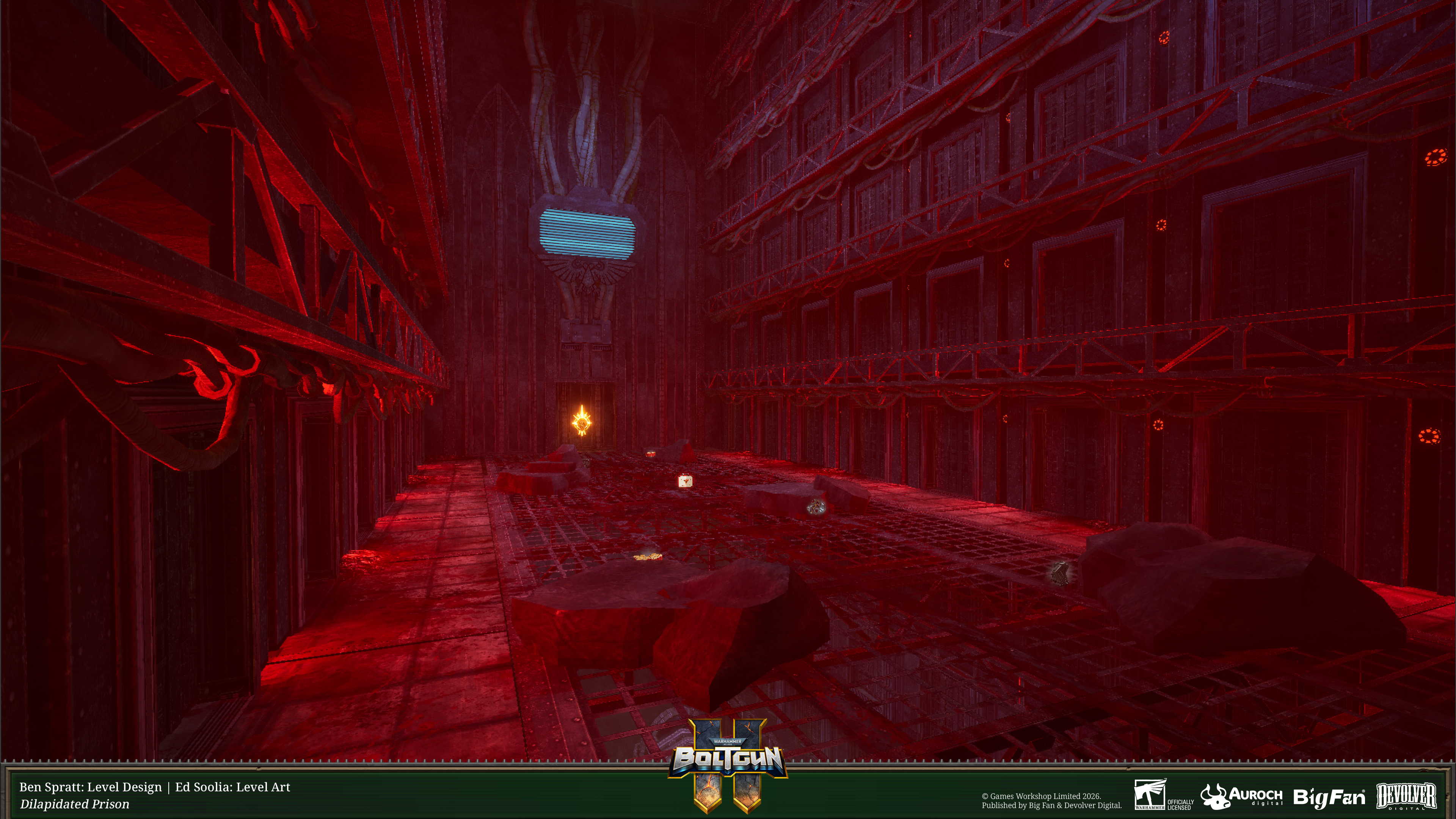
With this level I wanted to see how small I could make a map while retaining rich and involving gameplay. To maximise the space, I designed a layout that loops back on itself, where the player progresses through to the cellblock before returning to the central hub room. To keep things fresh, when backtracking there are some new routes (e.g. through an escape tunnel), and new enemy configurations that spawn in.
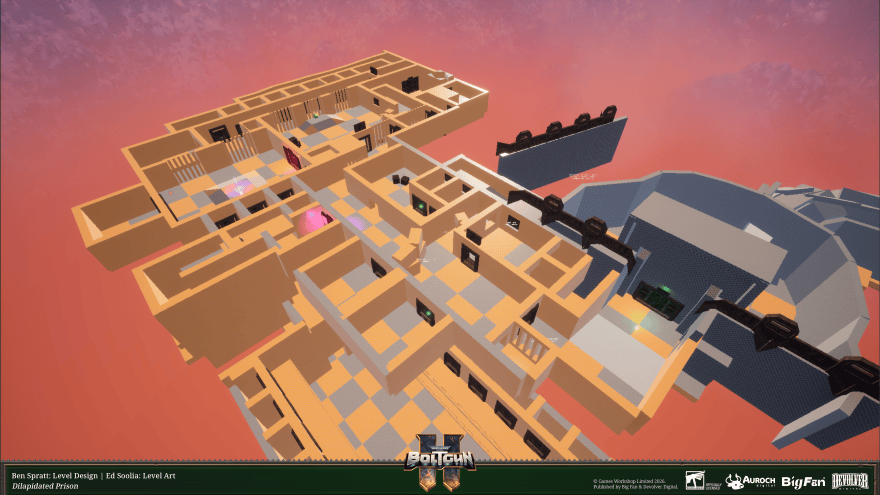
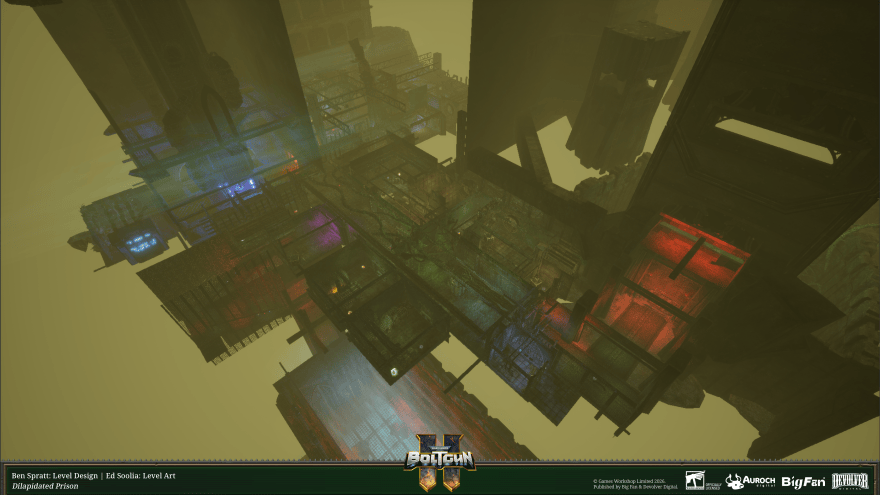
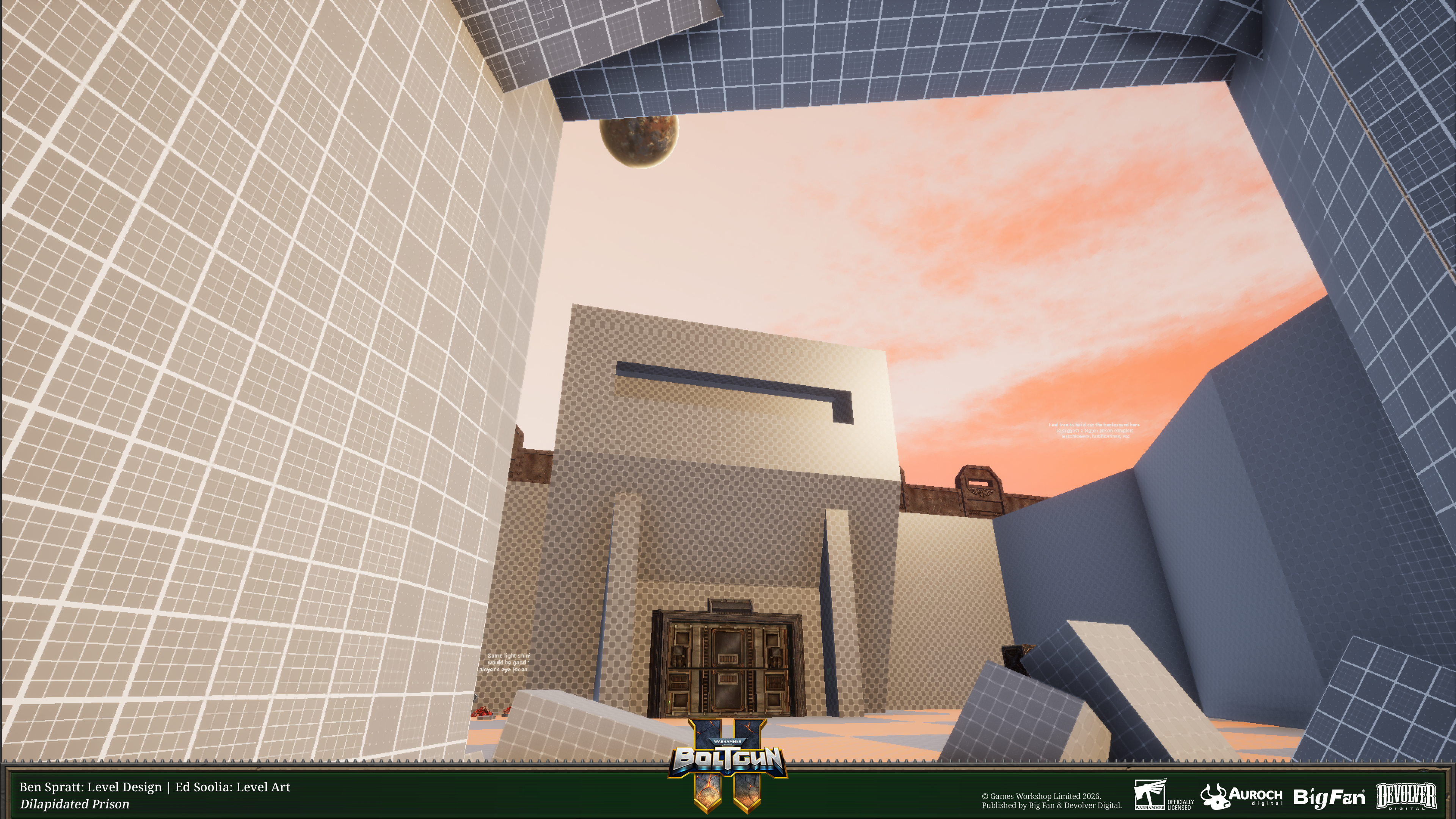
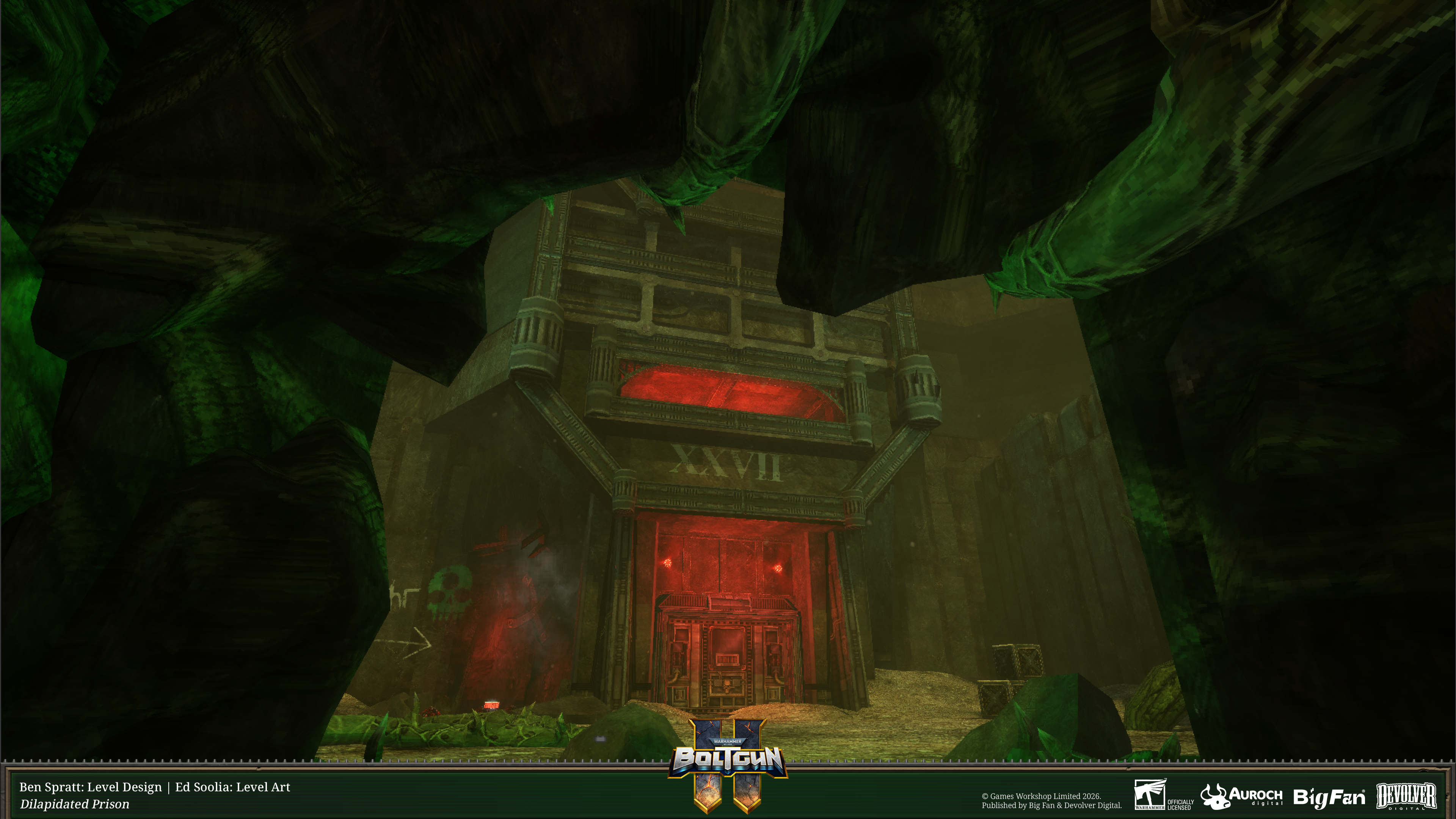
The blockout was very simple, allowing the art team to really embellish the space to push the crumbling, overgrown theme. I wanted to temper the grim atmosphere with moments of humour and playfulness, which resulted in the cell block corridor, which plays a few tricks on the player. Again to enrich the small spaces, I added some storytelling elements like the Ambull that has invaded one of the detention rooms, and the flavourful named minibosses in the final encounter.
You can watch gameplay footage of this level here.
Gallery: Dilapidated Prison initial blockouts and final level art
Features
Automap
We received lots of feedback from Boltgun players about wanting a map. Although we had added a Navigation Guide to the first game as a free update alongside the DLC, we decided that a map feature would please both new and existing players.
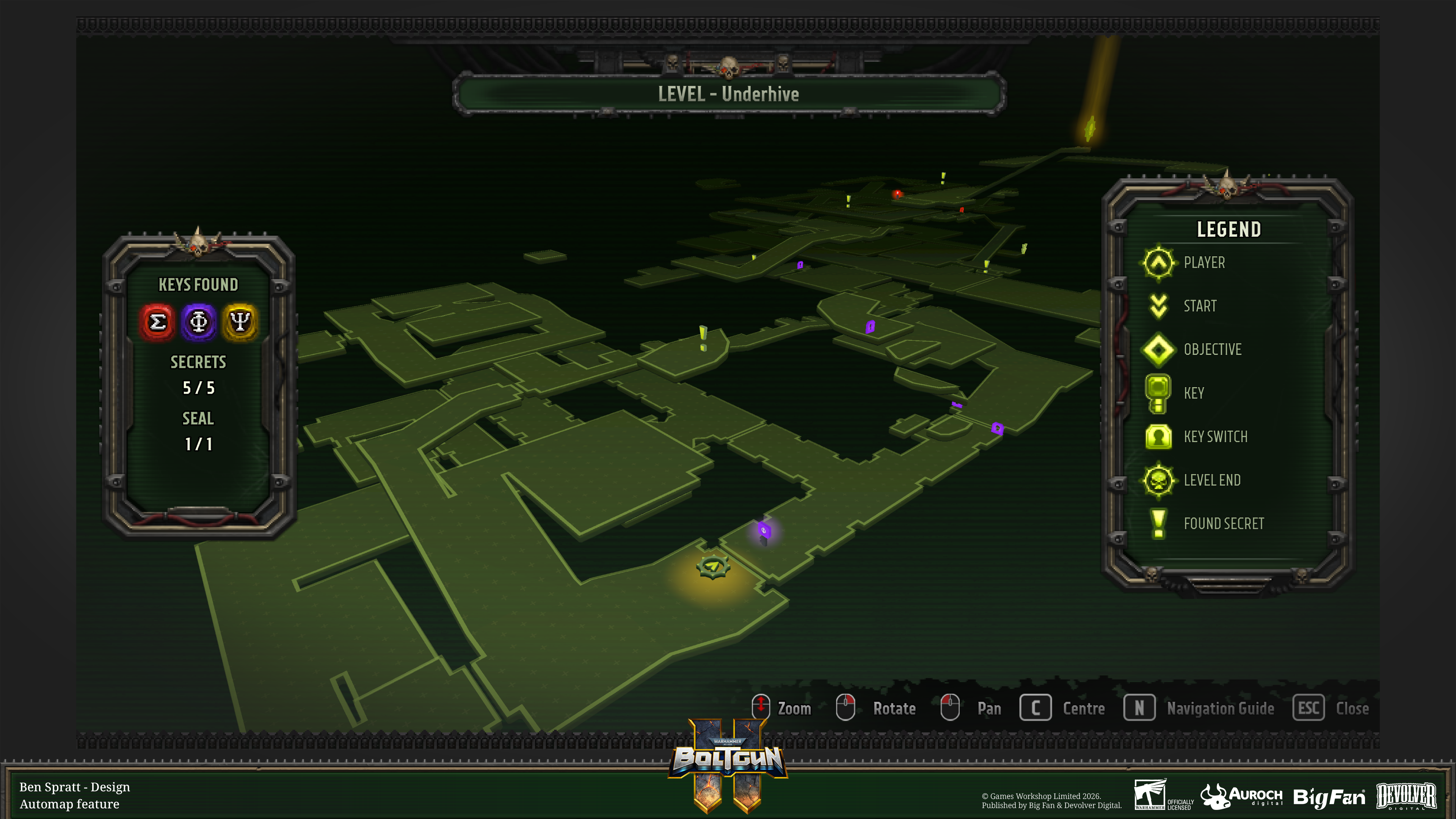
I wrote an initial design spec for the Automap feature, having researched similar ones in other games (e.g. 2016’s Doom reboot). I had to make several decisions about what we would and would not show on the map to support accuracy but also usability, for example whether or not we should show doors. I worked with colleagues from code, art and UI/UX to solve a range of technical, workflow and presentational issues before the final implementation.
Each level’s map was built by hand, and split into sectors which would unlock as players progressed. I oversaw the small sub-team that created the 3D maps, ensuring they had adequate training to complete the task, answering technical, design and aesthetic questions about the maps, and holding weekly catch-ups to check progress and issues. We delivered finished, polished maps for all 33 Boltgun 2 levels.
The Automap unlocks as players progress through each level, showing objectives and important collectables (e.g. keys). The map can be panned, zoomed, rotated and centred so players can get their bearings.
Enemies
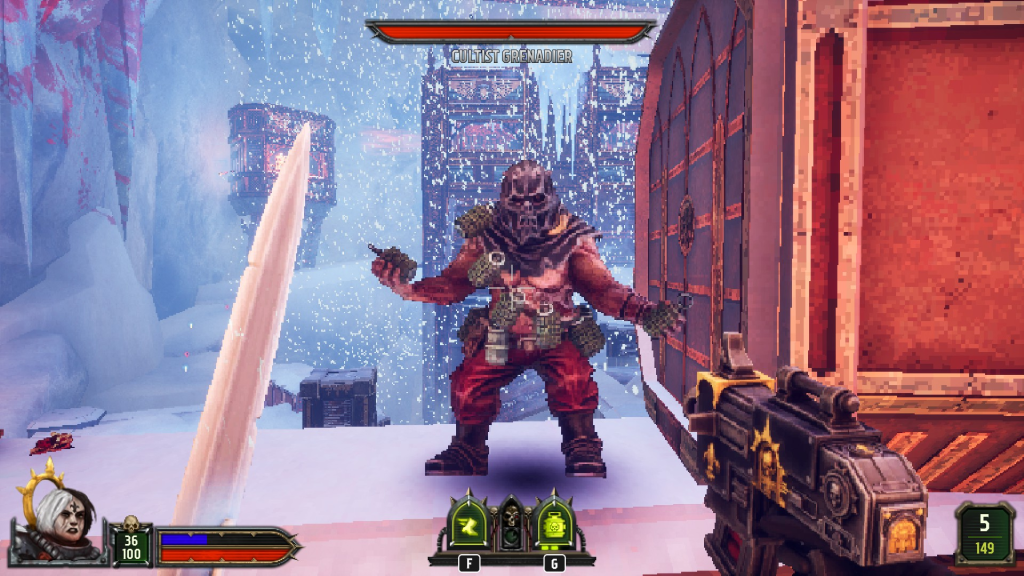
Boltgun 2 features a significantly expanded roster of enemies. We wanted to find interesting new enemy designs early in the project, and to this end I prototyped several enemies in the game, configuring blueprints and datasets of existing enemies to create novel NPC designs. The Grenadier Cultist is an example of one of these, protoyped using placeholder assets before being developed into a final shipped enemy.
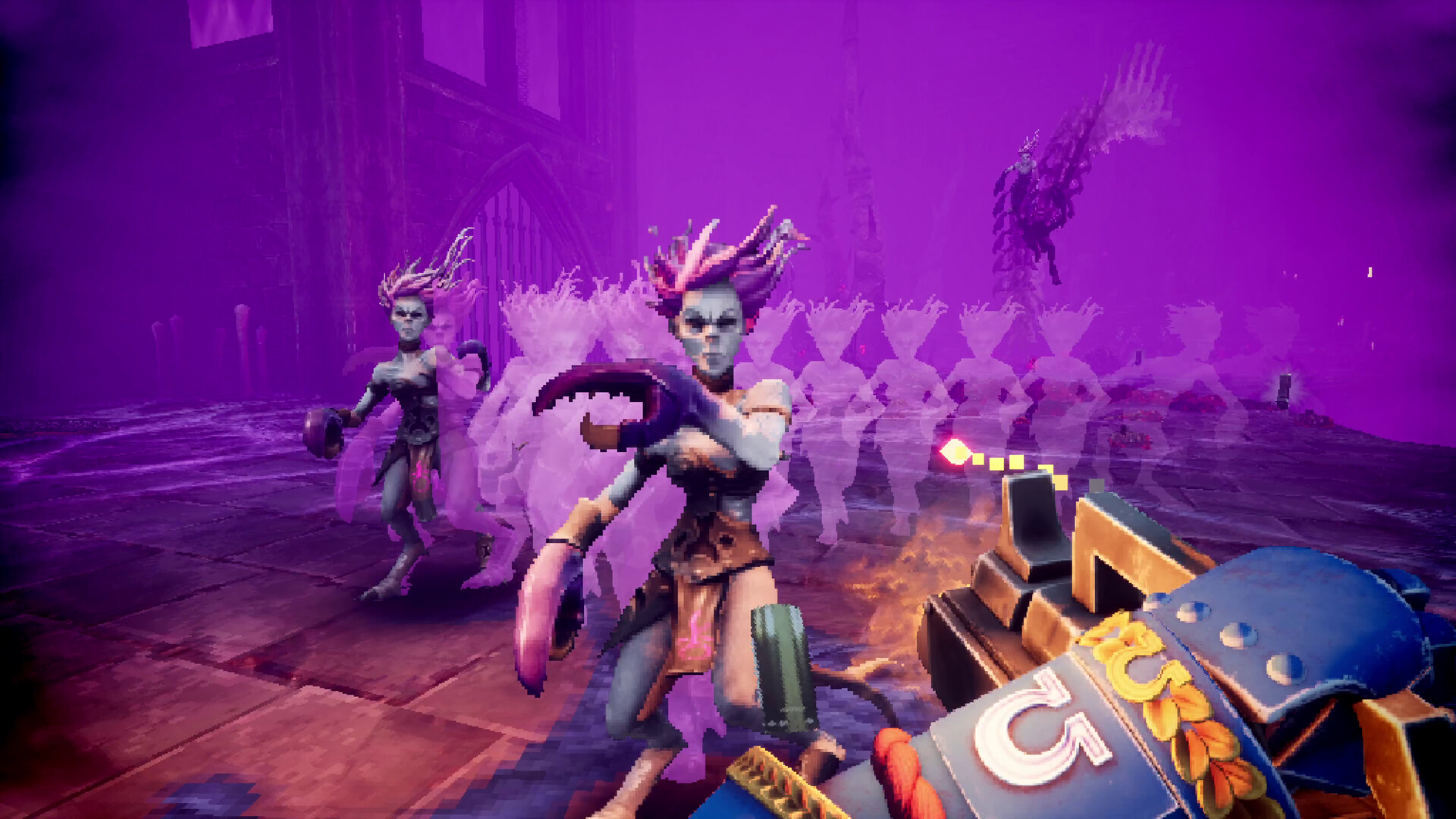
I also collaborated with the code team on enemies which had significant new behaviours, working together to ensure the new enemies had interesting attack sets, worked well with the design workflow, and met their design objectives. These included the leaping Daemonettes, strafing Fleshhounds, and swarming Poxwalkers, all of which presented very different design challenges.